
 By themediahives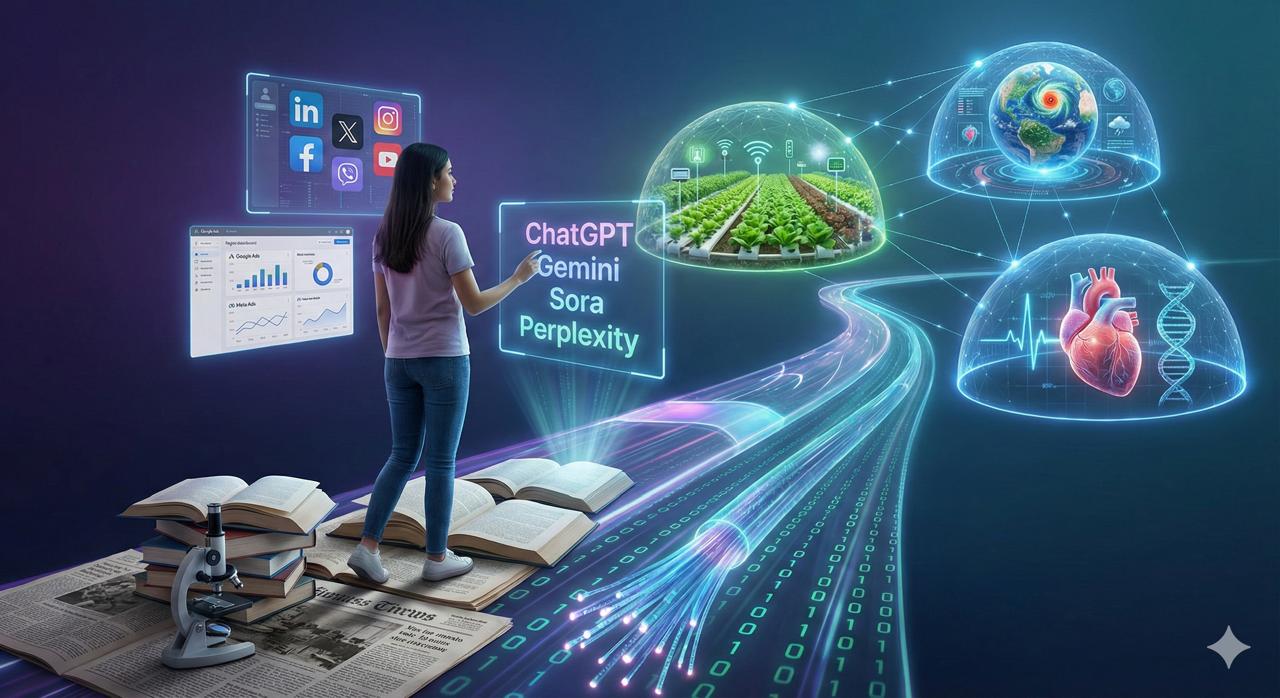
By Rina Karmur
(MMCJ Semester 4, Master’s in Mass Communication and Journalism)
The decision to pursue higher education is often influenced by a combination of curiosity, guidance, and personal circumstances. In the case of Rina, a Semester 4 student of the Master’s in Mass Communication and Journalism (MMCJ), the choice to enroll in this program was not the result of long-term planning but rather an outcome of intellectual curiosity and the recommendation of a roommate. What began as an exploratory step gradually evolved into a structured academic journey that contributed significantly to her understanding of media, communication, and emerging digital technologies.
At the time of admission, Rina’s familiarity with mass communication was limited to the role of an informed audience member. Like many students entering the field, her perception of media was shaped by daily consumption of news, social media content, and digital platforms. However, as she progressed through the MMCJ curriculum, she was introduced to the theoretical and practical foundations of communication studies. The program offered a systematic understanding of how media functions within society and how communication processes influence public awareness, opinion formation, and cultural discourse.
The academic structure of the MMCJ program exposed her to a wide range of subjects, including communication theories, media studies, ethics, digital communication, and research methodologies. These subjects encouraged analytical thinking and fostered a critical approach toward media content and communication strategies. Through classroom discussions, assignments, and academic readings, she developed an appreciation for the interdisciplinary nature of mass communication and its relevance in contemporary society.
A significant aspect of Rina Karmur’s academic journey was her exposure to information and communication technologies (ICT). This exposure highlighted the increasing importance of digital tools in the field of mass communication. In the present era, communication is no longer confined to traditional formats; instead, it operates through dynamic digital platforms that require adaptability and technological awareness. Understanding this shift was a crucial learning outcome during her academic experience.
Social media platforms such as LinkedIn, Facebook, and X (formerly Twitter) emerged as important areas of study. These platforms were examined not merely as channels of social interaction but as powerful tools for communication, networking, content dissemination, and professional development. Through academic exploration, Rina gained insight into how these platforms influence information flow and audience engagement, making them essential components of modern communication practices.
In addition to social media, the introduction to digital advertising platforms added another dimension to her understanding of strategic communication. Platforms such as Google Ads, Meta Ads, and LinkedIn Ads demonstrated how targeted communication plays a crucial role in reaching specific audiences. Learning about these platforms provided an understanding of how data-driven strategies are used to optimize visibility, engagement, and outreach in digital environments. This exposure helped her recognize the practical applications of communication theories in real-world scenarios.
Another notable component of her academic development was the introduction to artificial intelligence (AI) tools and their relevance in everyday academic and professional tasks. In a rapidly evolving digital landscape, AI has become an essential support system for efficiency and productivity. Rina was introduced to various AI-based tools such as ChatGPT, perplexity, Gemini, Grok, and Expression.com, sora, suno ai, gamma which assist in content development, generate music, language refinement, and research support.
While these tools were not positioned as replacements for human creativity or critical thinking, they were presented as complementary resources that can enhance workflow and academic performance. The responsible use of AI tools emphasized the importance of maintaining originality, ethical standards, and academic integrity. This balanced perspective allowed her to appreciate the benefits of AI while remaining aware of its limitations.
Throughout her academic journey, Rina experienced a gradual transformation in her outlook toward mass communication. What initially appeared to be a subject of general interest became a structured field of study with theoretical depth and practical relevance. The program encouraged self-reflection, adaptability, and continuous learning—qualities that are essential in the contemporary communication environment.
The MMCJ program also contributed to her personal growth by strengthening skills, confidence, Academic presentations, written assignments, played a vital role in enhancing these skills. The learning environment encouraged collaboration and intellectual exchange, further enriching the academic experience.
In conclusion, Rina Karmur’s journey through the Master’s in Mass Communication and Journalism reflects the transformative potential of higher education. What began as a decision driven by curiosity and external encouragement evolved into a meaningful academic experience that broadened her understanding of media, digital platforms, and emerging technologies. The exposure to ICT, social media, digital advertising, and AI tools provided valuable insights into the future of mass communication.
As she progresses toward the completion of her academic program, Rina carries forward the knowledge, skills, and perspectives gained during this journey. The MMCJ program has not only enhanced her academic foundation but also prepared her to engage thoughtfully and responsibly with the evolving landscape of mass communication.
AI Systems Supporting Sustainability and Real-World Challenges
Artificial Intelligence (AI) is no longer limited to improving efficiency in industries or assisting with digital tasks; it is increasingly being used as a powerful tool to address sustainability and real-world challenges. From climate change and environmental protection to healthcare and disaster management, AI systems are playing a crucial role in creating smarter and more sustainable solutions for global problems.
One of the most important areas where AI contributes to sustainability is environmental protection. AI-powered systems are used to monitor climate patterns, predict weather changes, and analyze environmental data. For example, AI models help scientists study climate change by analyzing large datasets related to temperature, rainfall, and carbon emissions. These insights support better decision-making for environmental policies and conservation efforts.
AI also plays a significant role in disaster prediction and management. Advanced AI systems can predict natural disasters such as floods, cyclones, and earthquakes by analyzing satellite images and real-time data. Early warning systems powered by AI help governments and communities prepare in advance, reducing loss of life and property. During disasters, AI can assist in rescue operations by mapping affected areas and identifying safe routes.
In the field of sustainable agriculture, AI tools help farmers optimize water usage, improve crop yield, and reduce waste. AI-based sensors and data analysis systems can monitor soil quality, weather conditions, and crop health. This enables farmers to use resources efficiently, supporting sustainable farming practices while increasing food security.
Healthcare is another area where AI supports real-world challenges. AI systems help in disease prediction, medical imaging analysis, and personalized treatment plans. By improving early diagnosis and healthcare accessibility, AI contributes to better public health outcomes, especially in resource-limited regions.
AI also supports energy sustainability by improving the management of renewable energy sources such as solar and wind power. AI tools can predict energy demand, optimize energy distribution, and reduce energy wastage. This helps in creating more efficient and environmentally friendly energy systems.
In conclusion, AI systems are becoming essential in addressing sustainability and real-world challenges. By supporting environmental protection, disaster management, agriculture, healthcare, and energy efficiency, AI contributes to building a more sustainable and resilient future. However, responsible and ethical use of AI is necessary to ensure that these technologies benefit society as a whole.