
 By Navjivan Express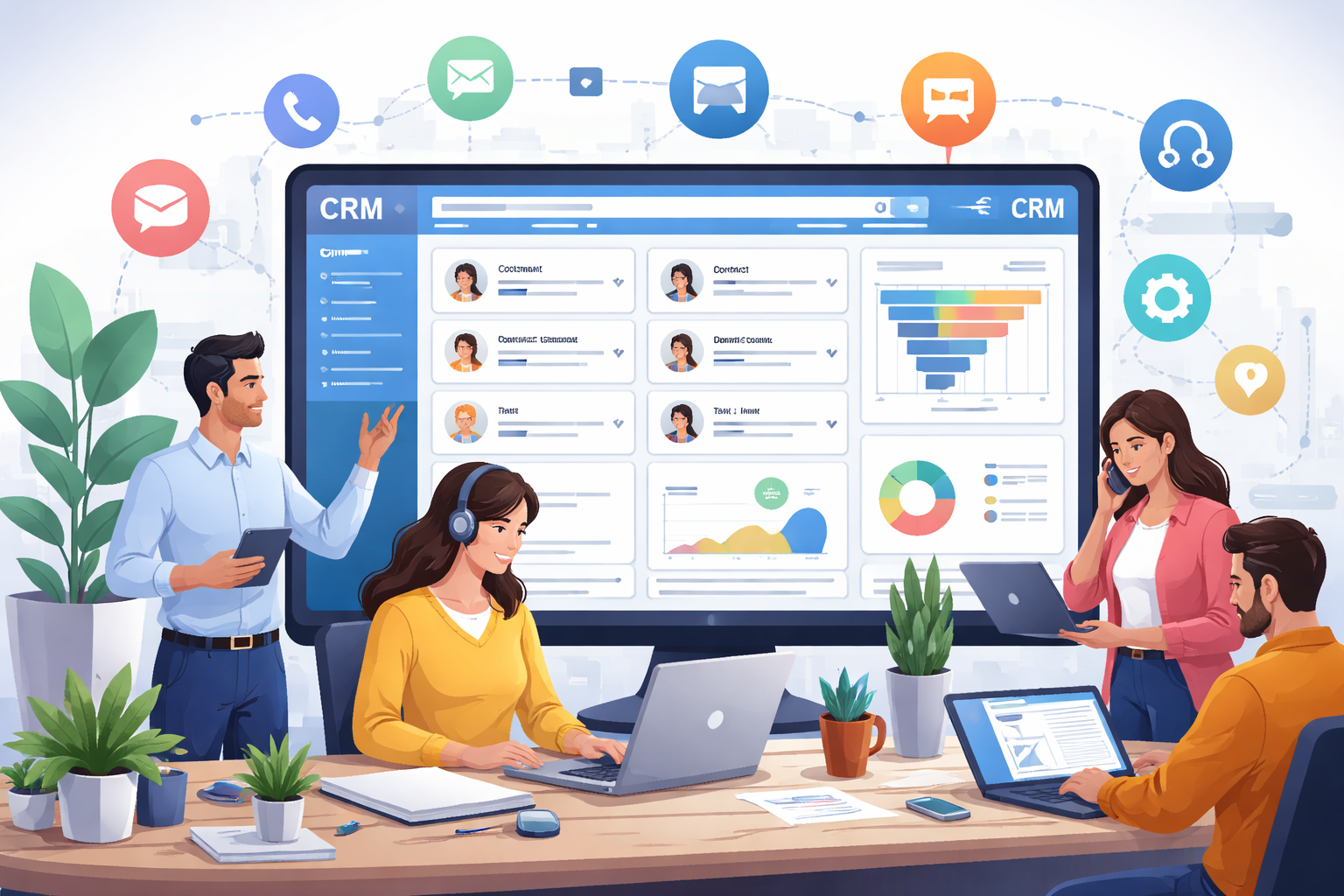
In today’s fast-evolving manufacturing landscape, customer experience is no longer a secondary factor- it is a defining competitive advantage. Modern manufacturers are judged not only by the quality of their products, but by how seamlessly they communicate, deliver, and support their customers. Businesses that fail to meet these expectations risk losing both trust and long-term relationships.
This is where an integrated CRM (Customer Relationship Management) system, combined with ERP solutions offered by QeMFG, becomes a game-changer. It brings every customer touchpoint and operational process into one connected ecosystem.
What is Integrated CRM in Manufacturing?
An integrated CRM in manufacturing is more than just a tool for managing contacts or tracking sales. It is a powerful system that connects customer data, sales pipelines, service interactions, production schedules, inventory, and delivery timelines into one unified platform.
When CRM is integrated with ERP, it ensures that every department- from sales to production to customer service- works with real-time, accurate data. This alignment removes guesswork and enables faster, smarter decision-making across the organization.
How Integrated CRM Elevates Customer Experience
1. Seamless Communication and Complete Transparency
With all customer interactions stored in a single system, teams gain instant visibility into orders, inquiries, and complaints. This enables faster responses, accurate updates, and clear communication-building trust and confidence with every interaction.
2. Faster, Error-Free Order Processing
By linking CRM with inventory and production systems, manufacturers can provide real-time insights into stock levels and lead times. This minimizes delays, reduces errors, and ensures commitments are met consistently.
3. Personalized Customer Engagement
Integrated CRM offers a 360-degree view of every customer- preferences, purchase history, and feedback. This empowers manufacturers to deliver tailored solutions, offer competitive pricing, and create meaningful, personalized interactions that strengthen relationships.
4. Efficient and Proactive After-Sales Support
Service teams gain full visibility into customer history and product details, allowing them to resolve issues quickly and effectively. Instead of reacting to problems, businesses can anticipate and prevent them- enhancing customer satisfaction.
5. Unified Collaboration Across Teams
An integrated system eliminates data silos by connecting sales, production, and supply chain teams. This ensures everyone is aligned, reducing miscommunication and enabling smooth, consistent customer experiences at every stage.
The QeMFG Advantage
Platforms like QeMFG go beyond traditional CRM by integrating ERP, AI, and real-time analytics into a single intelligent system. This empowers manufacturers to:
- Synchronize customer orders directly with production planning
- Forecast demand and prevent costly delays
- Monitor quality issues alongside customer feedback
- Enhance on-time delivery and overall customer satisfaction
With such capabilities, CRM evolves from a basic sales tool into a strategic engine that drives customer-centric manufacturing.
Conclusion
Integrated CRM is no longer a luxury- it is a necessity for manufacturers aiming to stay competitive in a demanding global market. By connecting customer insights with core operations, businesses can respond faster, operate smarter, and deliver exceptional experiences consistently.
Solutions like QeMFG demonstrate how the fusion of CRM and ERP transforms manufacturing from reactive workflows to proactive, customer-focused strategies. In an era where customer expectations are higher than ever, this integration is not just beneficial- it is the foundation for sustainable growth and long-term success.
Rushika Shah | Journalist
Ahmedabad