
 By Navjivan Express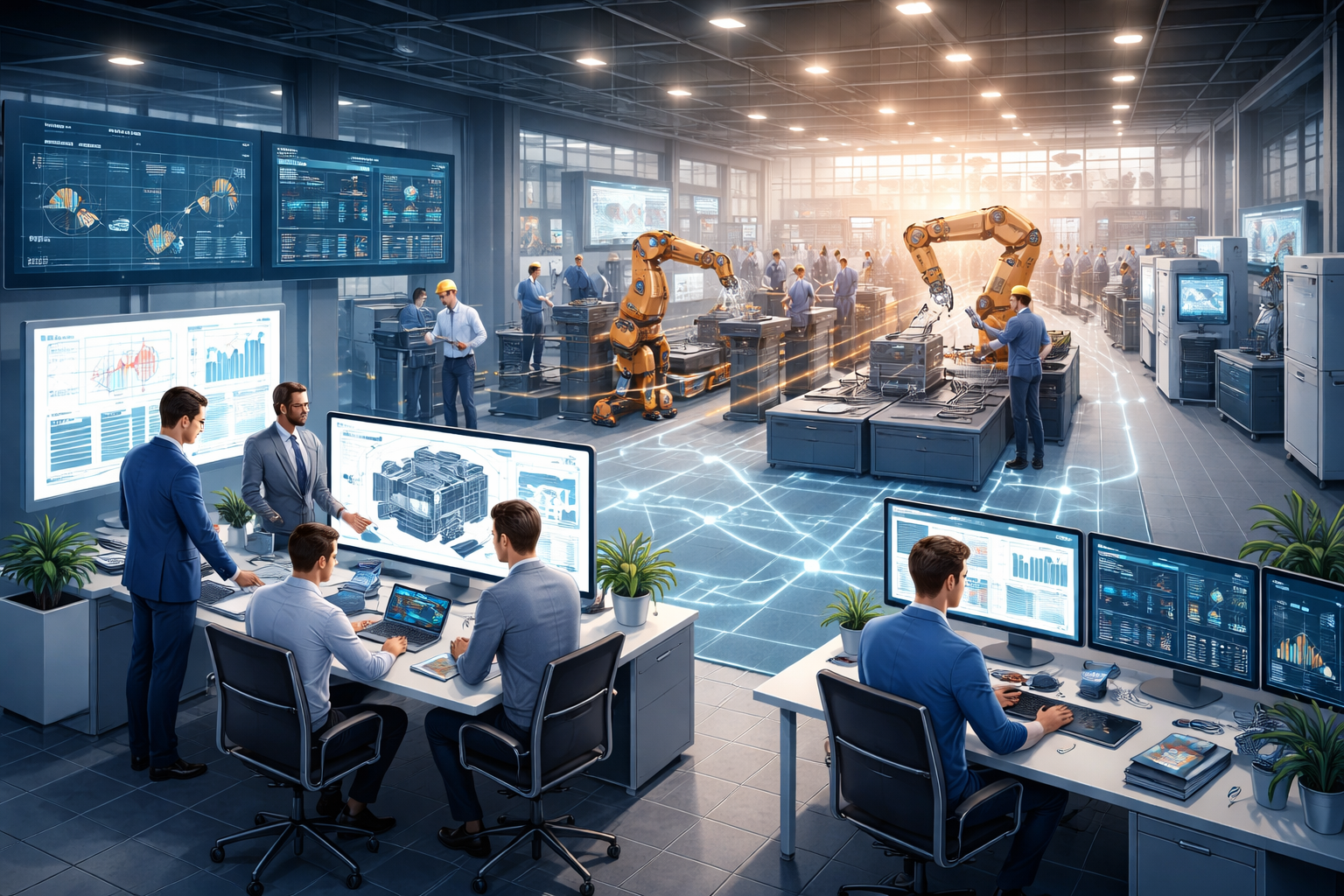
In today’s fast-evolving manufacturing landscape, customer relationship management (CRM) systems are no longer just tools for managing contacts and tracking sales. However, many manufacturers still rely on traditional CRM systems that were not designed for the complexity of industrial operations. This mismatch is creating operational inefficiencies, poor visibility, and missed growth opportunities.
Limitations of Generic CRM Systems
Traditional CRM systems are primarily built for general sales processes, focusing on customer data storage and pipeline tracking. They often lack the depth required for manufacturing-specific workflows.
In manufacturing environments, sales cycles are longer, involve technical specifications, and require coordination across multiple departments. Generic CRMs fail to support:
- Complex quotation processes and engineering inputs
- Multi-level distribution and dealer networks
- Real-time production and inventory insights
As a result, teams end up working in silos, relying on spreadsheets and manual coordination, which slows decision-making and increases errors.
The Need for Industry-Specific (Engineering-Focused) CRM
Modern manufacturing demands a CRM that goes beyond sales tracking and aligns with engineering and production realities. A manufacturing-focused CRM integrates customer data with operational workflows, enabling better planning and execution.
Such systems provide:
- Centralized, real-time visibility across sales, production, and service
- Integration with ERP, inventory, and supply chain systems
- Data-driven forecasting aligned with actual production capacity
When CRM is tailored to manufacturing, it becomes a strategic tool rather than just a record-keeping system. It enables companies to connect customer demand with operational execution, improving both efficiency and customer experience.
This is where platforms like QeMFG are designed differently- focusing specifically on engineering sales processes rather than generic CRM functionality.
The Shopfloor + Sales Integration Gap
One of the major shortcomings of traditional CRM systems is the lack of alignment between the shopfloor and sales teams. Sales often commit delivery timelines without real-time insight into production capacity, resulting in delays and reduced customer satisfaction.
Modern manufacturing requires seamless integration where:
- Sales orders directly influence production planning
- Inventory and capacity data inform sales commitments
- Service teams access complete customer and product histories
Without this integration, manufacturers face bottlenecks, miscommunication, and lost opportunities. In contrast, integrated CRM systems unify sales, production, and service into a single ecosystem, enabling faster and more accurate decision-making.
Conclusion
Traditional CRM systems are no longer sufficient for modern manufacturing environments. Their inability to handle engineering complexity, lack of operational integration, and siloed data structures make them a limiting factor rather than a growth enabler.
The future lies in industry-specific, engineering-focused CRM solutions that bridge the gap between sales and the shopfloor. By adopting such systems, manufacturers can achieve better visibility, improved coordination, and stronger customer relationships- turning CRM into a true driver of business performance.
Rushika Shah | Journalist
Ahmedabad