
 By Navjivan Express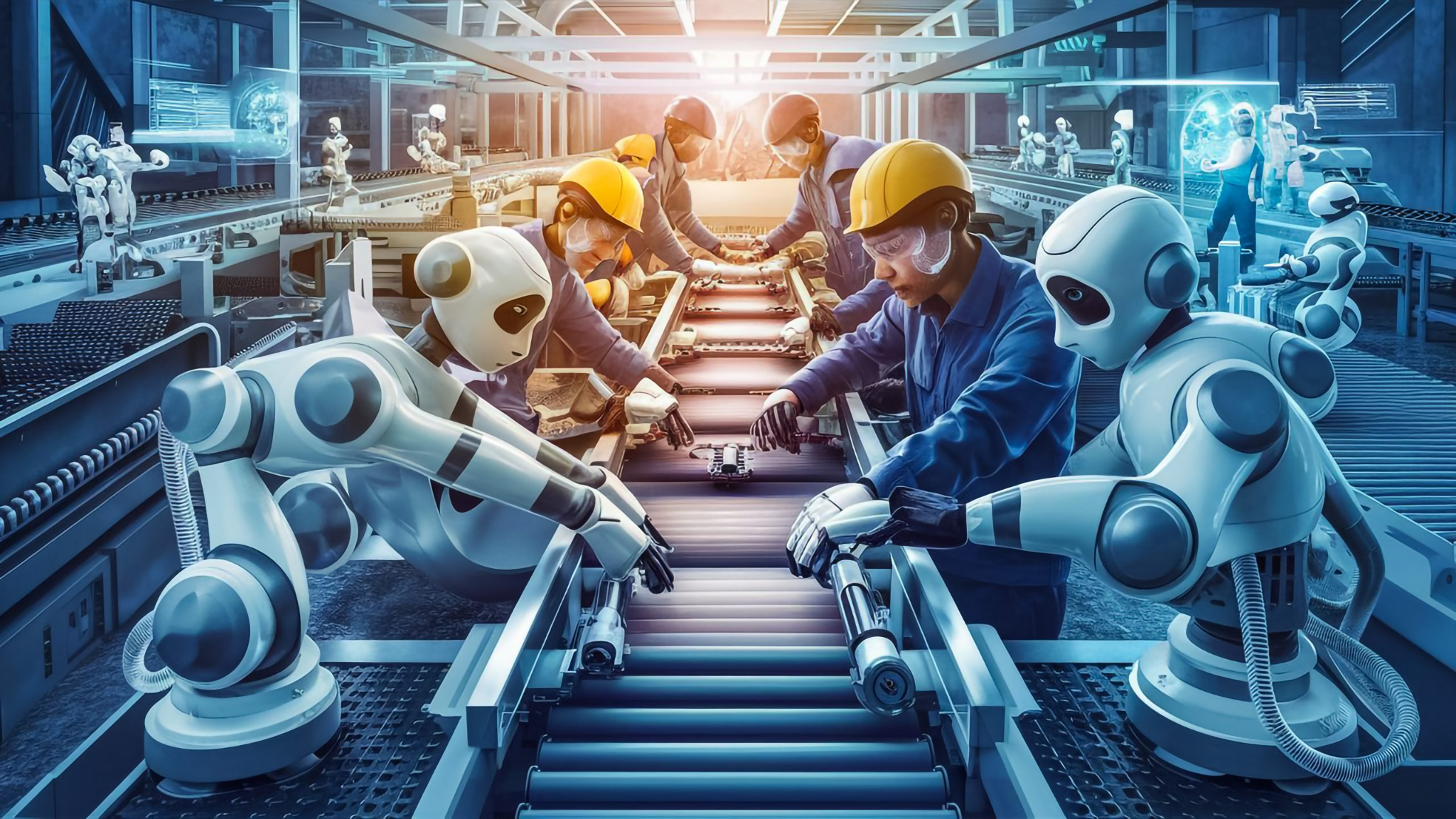
A decade ago, if you walked into a typical factory in India, you would hear the rhythmic hum of machines, see workers carefully assembling parts, and feel the steady pace of manual effort driving production forward. It was a system built on human skill, repetition, and experience.
Today, step into that same factory and the story feels different.
Arms of metal move with precision. Machines communicate with each other. Decisions are made in milliseconds. The floor is no longer just a place of labor it has become a space of intelligence. This transformation didn’t arrive with noise or headlines. It happened quietly, steadily, and powerfully reshaping the very foundation of how industries operate.
When Machines Became Essential.
There was a time when robotics was seen as a luxury something only large corporations could afford. It was impressive, but not essential. That reality has changed. As industries grew and global competition intensified, expectations evolved. Products needed to be better, faster, and more consistent. Delays became costly. Errors became unacceptable.
Factories began to realize something crucial: human effort alone could not keep up with this new demand. Robots stepped in not as replacements, but as enablers.
They brought precision where errors once occurred. They brought speed where delays once existed. And most importantly, they brought consistency where variability once challenged quality. The factory floor was no longer just about working harder it was about working smarter.
A Transformation Across Industries.
This shift didn’t stay confined to one sector. It spread across industries, each adapting robotics in its own way. In automotive manufacturing, robotic arms began handling welding, painting, and assembly with flawless accuracy. Tasks that once required intense manual effort were now completed faster and with fewer defects.
In electronics and semiconductor production, the scale of precision required went beyond human capability. Tiny components, delicate placements, and microscopic accuracy became the domain of robots working in controlled environments.
Warehouses and logistics hubs saw another kind of change. Movement became intelligent. Systems could pick, place, sort, and transport goods with minimal delay. Supply chains, once prone to inefficiencies, became faster and more reliable.
Even in healthcare and pharmaceuticals, robotics introduced a new level of safety and consistency. Processes became more controlled, reducing risks and improving outcomes. Each sector told the same story in a different way: robotics was no longer optional it was foundational.
India’s Unique Path: Innovation with Purpose.
What makes India’s journey unique is not just the adoption of robotics but how it is being adopted. Unlike many developed nations that rely on massive investments and large-scale research facilities, India’s progress is being driven by practical innovation.
Small businesses, startups, and MSMEs are building solutions that are not only effective but also affordable. Robotic systems are being designed to meet real-world challenges adaptable, scalable, and cost-efficient.
At the same time, national initiatives are encouraging this growth. Efforts to strengthen domestic manufacturing and boost industrial output are creating an environment where robotics is not just supported but accelerated.
India is no longer just using robotic technology. It is beginning to shape it.
The Changing Nature of Work.
Perhaps the most important part of this transformation is not technological it is human. There is a common fear that machines will take over jobs. But the reality unfolding on factory floors tells a different story. Jobs are not disappearing they are evolving.
Workers who once performed repetitive tasks are now managing and supervising intelligent systems. Technicians are learning to interpret data. Operators are becoming problem-solvers. The relationship between humans and machines is becoming collaborative. Robots handle precision and repetition. Humans bring judgment, creativity, and decision-making. Together, they create a system that is far more powerful than either could achieve alone.
Looking Toward the Future.
As India moves forward, the pace of this transformation is only expected to increase. With the integration of artificial intelligence, connected devices, and smart systems, factories are becoming more than production centers they are becoming ecosystems of intelligence.
The coming years will likely see even deeper collaboration between technology and human capability. Industries will become more responsive, more efficient, and more innovative.
For businesses, the direction is clear. Those who embrace robotics and intelligent systems will move ahead. Those who delay may struggle to keep pace.
A New Industrial Identity.
India’s industrial story is being rewritten not with noise, but with quiet precision. The shift from workforce to workbots is not about replacing people. It is about enhancing what people can achieve.
Factories are no longer defined by physical effort alone. They are defined by intelligence both human and machine. And as this transformation continues, one thing becomes certain:
The future of Indian industry will not be built by hands alone.
It will be shaped by machines, guided by data, and driven by human insight an evolution that we like QeMatic are proud to support as part of this transformative journey.
Rushika Shah | Journalist
Ahmedabad