
 By Navjivan Express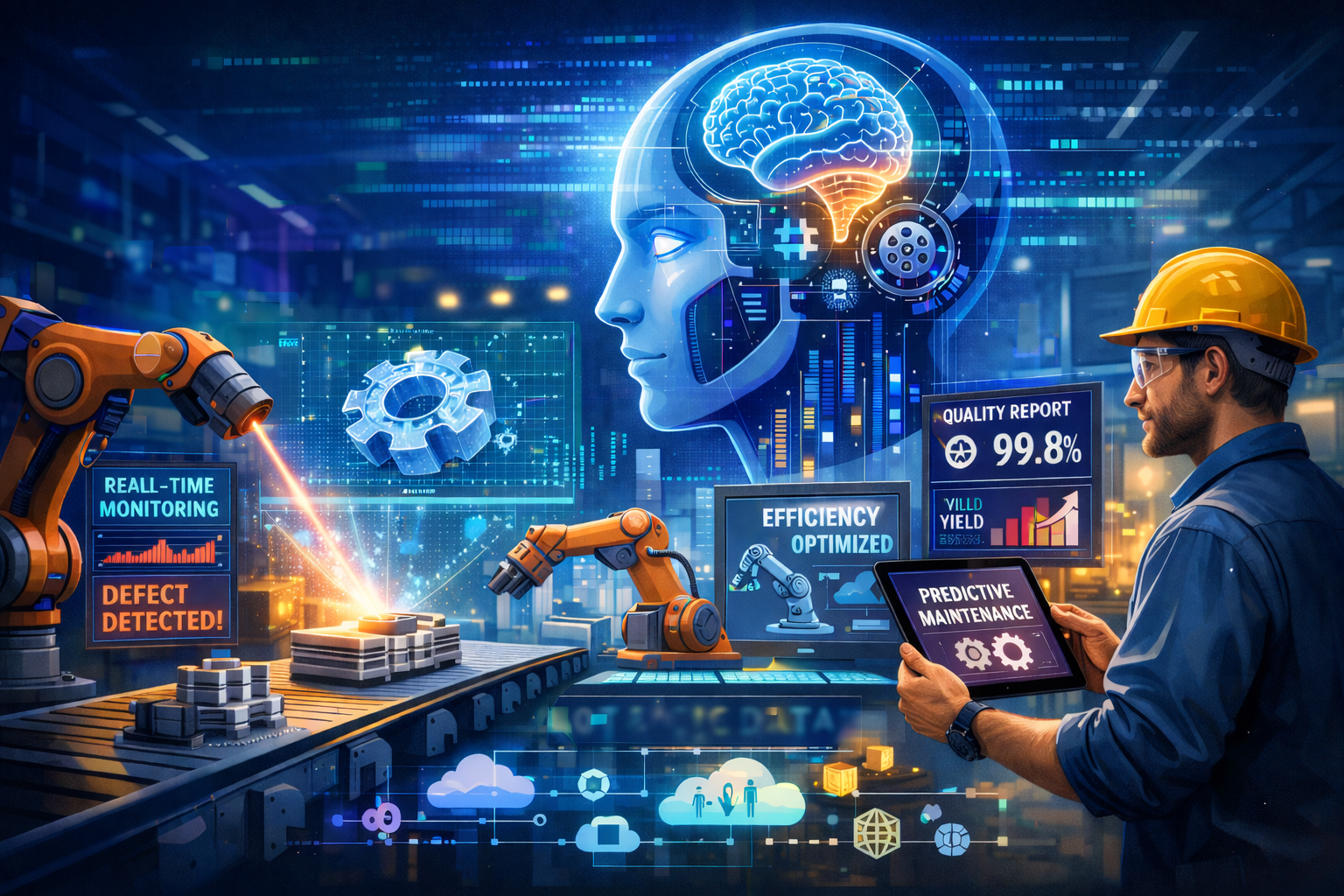
In today’s data-driven manufacturing landscape, quality management is no longer limited to manual inspections or reactive fixes. The integration of Artificial Intelligence (AI) and advanced data analytics is transforming quality processes into intelligent, predictive, and highly automated systems. By leveraging real-time data and machine learning, manufacturers can ensure higher precision, consistency, and compliance across operations.
AI in Quality Checks: From Manual to Intelligent Inspection
Traditional quality checks often rely on human inspection, which can be slow, inconsistent, and prone to error. AI-powered systems, especially those using computer vision, are redefining this process by enabling automated, real-time inspections.
- AI systems can detect defects, anomalies, and inconsistencies with high precision
- They analyze images, videos, and sensor data faster than human inspectors
- Continuous monitoring ensures every product is evaluated under the same standards
AI-driven inspection improves both speed and accuracy, reducing dependency on manual labor while enhancing reliability.
Smarter Testing with Predictive Intelligence
AI doesn’t just identify defects, it predicts them. By analyzing historical and real-time production data, AI systems can forecast potential quality issues before they occur.
- Predictive analytics identifies patterns and root causes of defects
- Real-time feedback loops allow immediate corrective actions
- Continuous learning improves testing accuracy over time
This shift from reactive to predictive quality management helps manufacturers minimize downtime, optimize processes, and maintain consistent output.
Enhancing Compliance and Standardization
Compliance in manufacturing is critical, especially in industries like automotive, pharmaceuticals, and food processing. AI simplifies compliance by ensuring strict adherence to quality standards.
- Automated documentation and reporting improve traceability
- AI systems enforce consistent inspection criteria across batches
- Real-time monitoring helps meet regulatory requirements
By reducing human error and maintaining uniform standards, AI strengthens compliance frameworks and reduces the risk of costly recalls or penalties.
Reducing Defects and Improving Consistency
One of the most significant advantages of AI in quality management is its ability to drastically reduce defects while improving product consistency.
- AI detects even microscopic defects invisible to the human eye
- Early-stage defect detection reduces rework and material waste
- Standardized inspections ensure uniform product quality
This leads to higher production efficiency, reduced waste, and improved customer satisfaction.
Data as the Backbone of Quality Excellence
Modern quality management is powered by data. AI systems collect and process vast amounts of production data to generate actionable insights.
- Data-driven insights enable continuous process improvement
- Root cause analysis becomes faster and more accurate
- Manufacturers can make informed decisions to optimize quality
QeMFG enables organizations to bring together operations, quality, and performance through a centralized data platform, creating a truly connected and intelligent ecosystem. The Future of Quality Management
AI and data are not just enhancing quality management, they are redefining it. The future lies in autonomous quality systems where machines can self-monitor, self-correct, and continuously improve without human intervention.
Manufacturers that embrace AI-driven quality management gain:
- Higher efficiency and reduced operational costs
- Improved product reliability and customer trust
- A competitive edge in an increasingly digital industry
Conclusion
AI and data are transforming quality management from a reactive function into a strategic driver of manufacturing excellence. By integrating intelligent inspection, predictive testing, and data-driven decision-making, manufacturers can significantly reduce defects, improve consistency, and ensure compliance.
In a world where precision and speed define success, AI-powered quality management is no longer optional, it is essential for building a smarter, more resilient manufacturing future.
Rushika Shah | Journalist
Ahmedabad