
 By Navjivan Express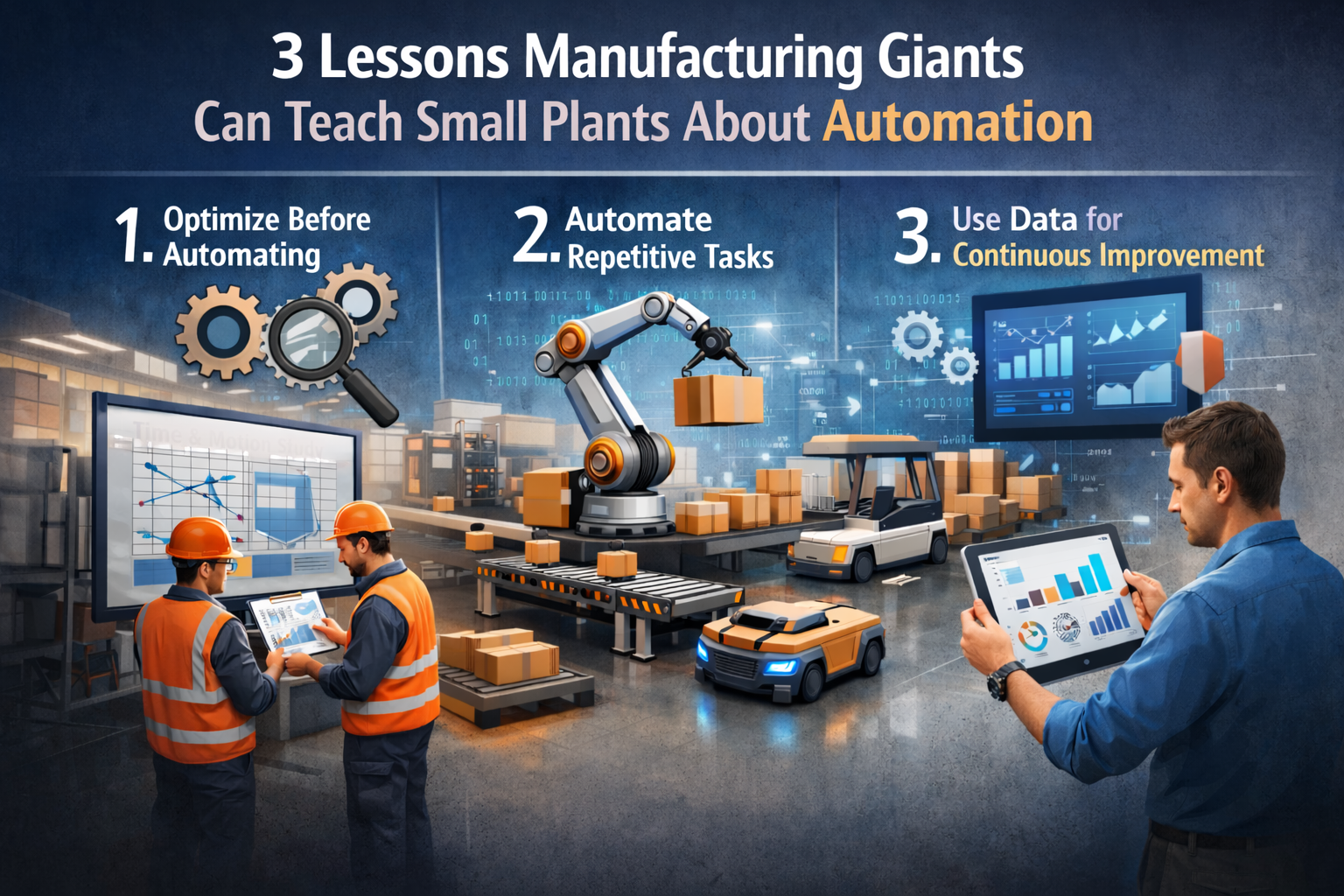
In today’s competitive manufacturing landscape, automation is no longer a luxury- it’s a necessity. While large manufacturing giants have already embraced advanced technologies, small and mid-sized plants often struggle to know where to begin. The good news? You don’t need massive budgets to learn from industry leaders. By adopting the right strategies, even smaller plants can unlock significant efficiency gains.
Here are three powerful lessons small manufacturing plants can learn from large-scale operations:
- Start with Process Understanding, Not Automation
One of the biggest mistakes small plants make is jumping straight into automation without fully understanding their processes. Manufacturing giants don’t automate blindly, they first analyze workflows in detail.
This is where techniques like time & motion studies come into play. By breaking down tasks and identifying inefficiencies, companies can pinpoint exactly where automation will deliver the most value.
Large manufacturers invest heavily in this diagnostic phase because:
- It reveals hidden bottlenecks
- Eliminates unnecessary movements
- Creates a clear roadmap for automation
- Focus on High-Impact, Repetitive Tasks
Manufacturing leaders prioritize automation where it matters most- repetitive, time-consuming, and error-prone tasks. These areas deliver the fastest return on investment.
For example:
- Data entry and reporting
- Inventory tracking
- Assembly line repetitive actions
Technologies like Robotic Process Automation (RPA) and AI-powered tools are widely used to handle such tasks efficiently.
By automating repetitive work, companies achieve:
- Faster production cycles
- Reduced human error
- Lower operational costs
- Combine Automation with Data & Continuous Improvement
Top manufacturers don’t treat automation as a one-time project- it’s an ongoing journey powered by data.
Modern factories use:
- AI and machine learning for predictive insights
- IoT sensors for real-time monitoring
- Analytics dashboards for decision-making
These tools provide continuous feedback, helping businesses refine processes over time.
Additionally, automation works best when combined with a culture of continuous improvement:
- Regular performance tracking
- Employee training and involvement
- Ongoing process optimization
Conclusion
Small manufacturing plants don’t need to replicate the scale of industry giants- but they can absolutely replicate their mindset. By focusing on process understanding, prioritizing high-impact automation, and leveraging data for continuous improvement, even smaller facilities can achieve significant productivity gains.
We at QeMatic believe that with the right blend of technology, data insights, and strategic implementation, businesses of all sizes can embrace automation effectively and turn efficiency into a long-term competitive advantage.
Rushika Shah | Journalist
Ahmedabad