
 By Navjivan Express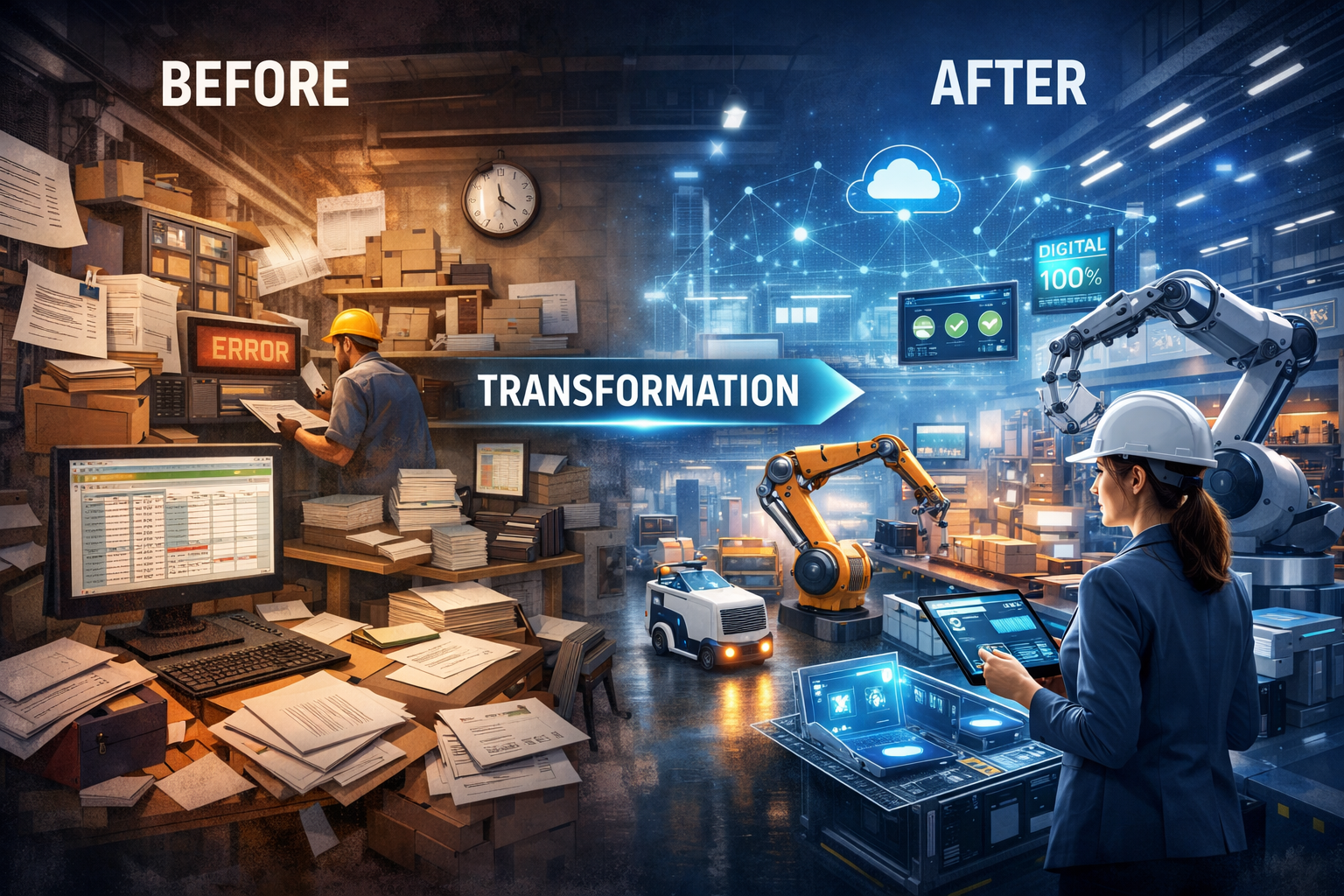
Modern manufacturing often struggles with disconnected systems, manual processes, and lack of real-time visibility. In many factories, planning happens in spreadsheets, production is tracked on paper, and departments like quality and dispatch operate in silos- leading to delays, errors, and operational chaos.
Smart manufacturing addresses this challenge by integrating advanced technologies like IoT, AI, cloud computing, and automation into a unified system. This transformation connects machines, people, and processes, enabling manufacturers to monitor, analyze, and optimize operations in real time.
From Chaos to Control
Traditional manufacturing environments lack synchronization. Without a centralized system:
- Production planning is inconsistent
- Machine performance is not tracked in real time
- Quality issues are identified too late
- Inventory and dispatch lack visibility
Smart manufacturing platforms- like those highlighted in QeMFG’s solutions- solve this by creating a digital ecosystem where every stage of production is interconnected. Data flows seamlessly across departments, giving decision-makers complete control over operations.
Key Smart Manufacturing Capabilities
- Real-Time Monitoring & Visibility
Connected systems provide live insights into machine status, production progress, and bottlenecks. This enables faster decision-making and immediate corrective actions. - Predictive Maintenance
Sensors and analytics predict equipment failures before they happen, reducing downtime and maintenance costs while extending machine life. - Integrated Quality Control
Automated quality checks ensure defects are detected early, improving product consistency and reducing waste. - Data-Driven Planning
Instead of relying on manual estimates, smart systems use real-time data to optimize production schedules, inventory, and resource allocation. - End-to-End Connectivity
From raw materials to final dispatch, every process is digitally linked- eliminating silos and ensuring smooth workflows.
Measurable Business Impact
The shift from chaos to efficiency delivers tangible results:
- Reduced downtime through predictive maintenance
- Improved productivity and throughput
- Lower operational costs through automation
- Better product quality and customer satisfaction
- Faster, data-driven decision-making
Studies show smart manufacturing can significantly improve efficiency, reduce errors, and increase overall operational performance.
The Bigger Picture: Smart Factories
Smart manufacturing is not just about automation- it’s about building intelligent, self-optimizing systems. These systems continuously learn from data, adapt to changes, and improve performance over time.
By integrating technologies and aligning processes, manufacturers move from reactive problem-solving to proactive optimization- turning operational chaos into structured, scalable efficiency.
Conclusion
Transforming chaos into efficiency is no longer optional- it’s essential for staying competitive. Smart manufacturing solutions, like those demonstrated in QeMFG’s use cases, empower businesses to unify operations, gain real-time control, and drive continuous improvement.
The result is a smarter, faster, and more resilient manufacturing environment- where efficiency is not just achieved, but continuously optimized.
Rushika Shah | Journalist
Ahmedabad