
 By Navjivan Express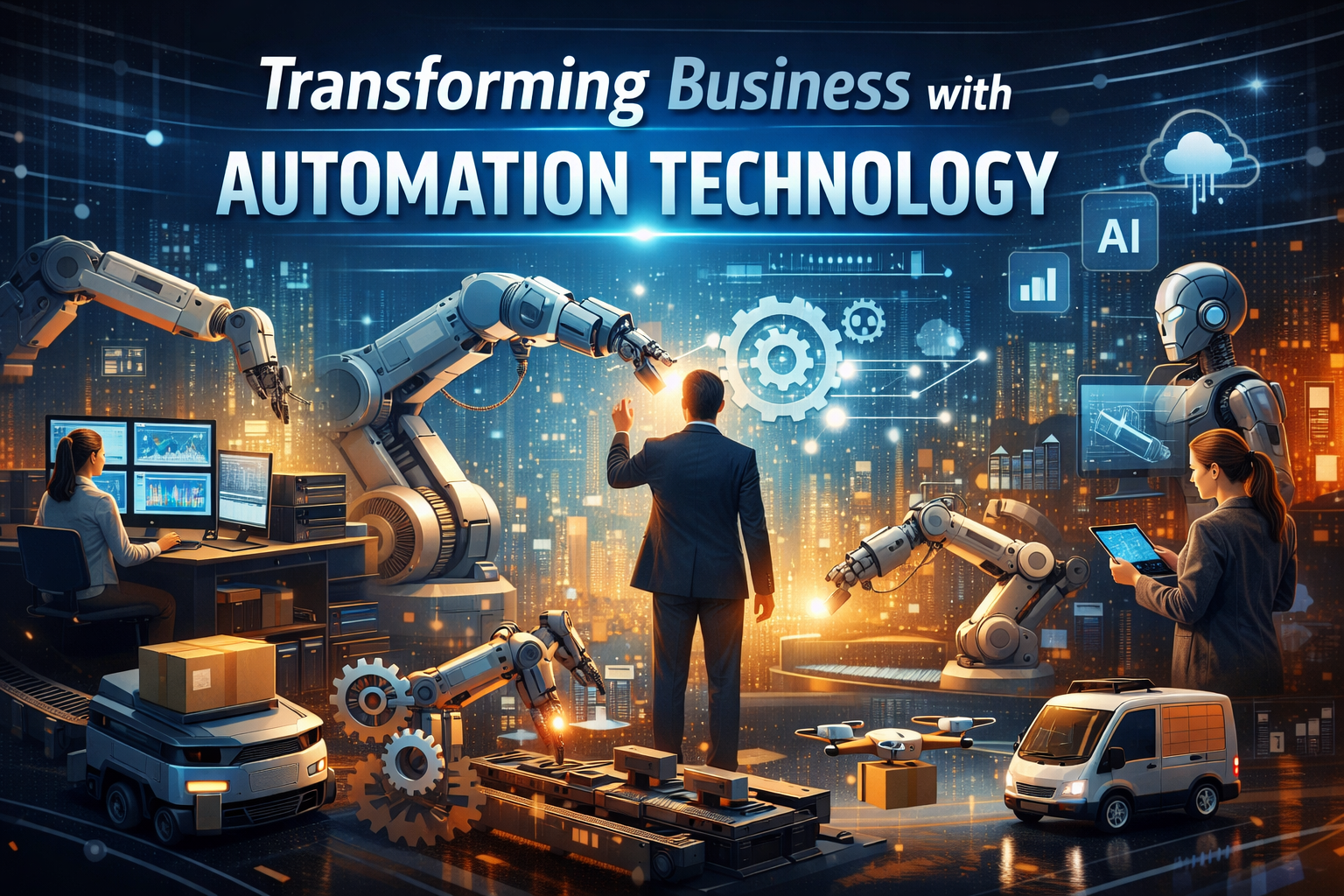
In today’s fast-changing business environment, relying on manual processes is no longer sustainable. Companies are rapidly shifting toward automation to improve efficiency, reduce costs, and stay competitive. This transformation from manual to smart operations is redefining how modern businesses function.
The shift is clear:
Manual → Automated → Intelligent → Autonomous
The Shift from Manual to Smart Operations
Traditional business processes often rely on human effort for repetitive tasks like data entry, reporting, and customer handling. These methods are time-consuming and prone to errors. Automation replaces these inefficiencies with software bots, AI systems, and intelligent workflows that can perform tasks faster and with higher accuracy.
Today, businesses are not just automating tasks, they are building smart systems that can learn, adapt, and make decisions in real time.
What Powers Modern Automation
Modern automation combines multiple technologies such as:
- Robotic Process Automation (RPA): Automates rule-based, repetitive tasks
- Artificial Intelligence (AI) & Machine Learning (ML): Enables systems to analyze data and make decisions
- Intelligent Automation: Blends AI with RPA to handle complex workflows and unstructured data
Companies like QeMatic are helping businesses integrate these technologies to create smarter, more efficient operations.
How Automation Is Transforming Businesses
Automation is impacting every aspect of business operations:
- Increased Efficiency: Tasks that once took hours are now completed in minutes
- Cost Reduction: Less manual labor and fewer errors reduce operational costs
- Improved Accuracy: Automated systems ensure consistent and error-free outputs
- Faster Decision-Making: Real-time data insights enable smarter business decisions
For example, automation can reduce manual processing time significantly and improve workflow speed across departments like finance, manufacturing, and customer service.
Real-World Impact Across Industries
Automation is no longer limited to large enterprises, it is transforming industries of all sizes:
- Manufacturing: Faster production, fewer defects, and better inventory control
- Healthcare: Automated patient data handling and faster claims processing
- Finance: Streamlined loan processing and fraud detection
- Retail & Logistics: Improved order management and real-time tracking
Businesses adopting automation are seeing measurable improvements in productivity, accuracy, and customer experience.
From Automation to Intelligence
The future is not just automation, it’s intelligent and autonomous systems. Businesses are moving beyond basic automation toward systems that:
- Learn from data
- Adapt to changing conditions
- Make decisions without constant human input
This evolution from RPA to AI-driven autonomous processes is creating smarter enterprises that can operate faster and scale effortlessly.
The Human Advantage
Automation doesn’t replace humans, it enhances their roles. By handling repetitive tasks, automation allows employees to focus on:
- Strategy and innovation
- Problem-solving
- Customer relationships
This shift leads to better productivity and a more skilled workforce.
Conclusion
The move from manual to smart is not just a trend, it is a necessity for modern businesses. Automation is helping organizations become faster, more efficient, and more competitive in a digital-first world.
Rushika Shah | Journalist
Ahmedabad