
 By themediahives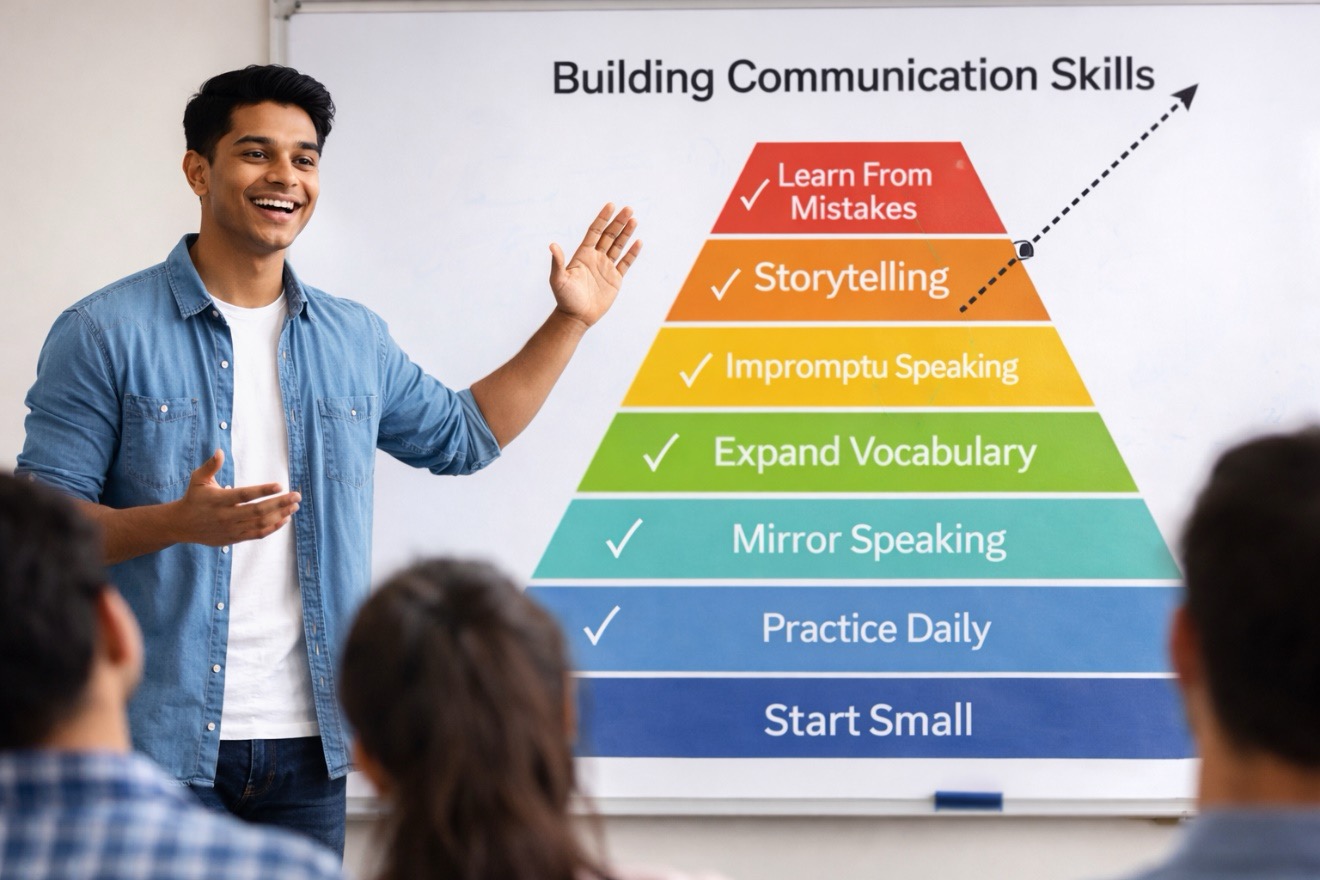
Introduction – The Silent Beginning
When I was younger, I used to sit in the back row, quiet, unnoticed, and often invisible. I had ideas, dreams, and thoughts I wanted to share, but fear always held me back. Public speaking terrified me. Speaking in English made me nervous. Stage fear and shyness made my voice shrink, and self-doubt whispered that I wasn’t good enough.
Many youth face the same struggle. We live in a world where confidence is often measured by how loudly and clearly we speak. But silence isn’t always a choice — sometimes it’s a shield. And yet, every missed opportunity to express yourself chips away at your potential. “Silence felt safer than embarrassment. But silence was slowly killing my confidence.”
This is not just my story. It’s a story for every young person who has ever felt their voice was too small. It’s a story about realizing that communication is a skill, and like any skill, it can be learned and mastered.
The Turning Point – Realizing Words Matter
The first time I truly realized the importance of communication was during a college workshop. The trainer said something simple yet profound:
“Communication is not about perfect English. It’s about expressing your thoughts clearly and confidently.” That statement changed my perspective entirely. I realized that confidence doesn’t come naturally to everyone, but skills can be built. That day, I faced my first formal presentation. My hands shook, my heart raced, and my voice trembled. But I stood, spoke, and finished. The applause wasn’t for perfection — it was for courage. And that was the first lesson: courage precedes confidence. From that moment, I committed to practicing communication every single day. What started as a tiny spark grew into a journey that transformed my life.
Daily Habits – Building Confidence One Step at a Time
Confidence isn’t magical. It’s built brick by brick through consistent effort. Here’s how I structured my daily habits:
- Mirror Speaking: Every morning, I spent five minutes speaking in front of a mirror. I observed my gestures, posture, and tone. At first, it felt awkward — but gradually, I learned to speak to myself with intention, correcting my expressions and noticing how I came across.
- Reading Aloud: Books, articles, blogs, even social media posts — I read everything aloud. This improved fluency, vocabulary, and pronunciation. Reading aloud also gave me confidence to express ideas without hesitation.
- Recording and Self-Evaluation: Recording my voice was uncomfortable at first. I didn’t like what I heard. But it became a mirror of my progress. Listening allowed me to identify mistakes, adjust tone, and refine delivery.
- Impromptu Speaking: I challenged myself to speak for one or two minutes on random topics daily. This exercise taught me quick thinking, clarity of thought, and fearlessness in uncertain situations.
- Journaling: Each night, I documented what I spoke about that day, what felt successful, mistakes made and lessons learned, and goals for tomorrow. Journaling created accountability and reflection, which accelerated growth.
- “Confidence did not arrive suddenly. It grew quietly, one step at a time.”
Facing Challenges – Fear, Mistakes, and Stage Anxiety
Fear is natural. Every youth struggles with stage fear, shyness, or hesitation. What matters is how we respond to it.
- Stage Fear: I learned to breathe deeply, visualize success, and start small. Over time, presenting to a class felt manageable.
- Mistakes: Forgetting lines, mispronouncing words, or stumbling on stage was inevitable. I reframed mistakes as lessons. Each mistake became a step toward mastery.
- Self-Doubt: Comparing myself to others used to paralyze me. I focused on personal growth rather than competition.
“If you wait for perfection before speaking, you will never speak. Speak first. Improve later.” Mistakes are stepping stones, not roadblocks. Courage plus persistence builds resilience.
Applying Communication – Classrooms, Workshops, Social Life
Communication is only valuable when applied. I began using my skills in:
Classroom Participation: I raised my hand regularly, shared opinions, and asked questions. I volunteered for group discussions and presentations.
Workshops and Seminars: Speaking in front of new audiences became manageable. I led small sessions, received feedback, and grew from critique.
Social Interactions and Networking: I initiated conversations, asked meaningful questions, and listened actively. I learned that communication strengthens relationships and builds trust.
“Confidence is not about being loud; it’s about being heard.”
Through consistent application, I transformed fear into opportunity and leadership.
Advanced Skills – Storytelling, Influence, and Leadership
Beyond basics, I focused on advanced techniques to truly inspire others:
Storytelling: Engaging narratives captivate audiences. Sharing personal experiences made communication authentic.
Persuasion: I learned to express ideas with logic, emotion, and clarity.
Leadership: Leading projects, workshops, and discussions taught me that communication is a tool to guide and inspire others.
Storytelling and leadership skills turned classroom communication into life skills that impacted my personal and professional growth.
Practical Tips & Action Plan for Youth
Here are actionable exercises for youth to build confidence:
- Mirror Speaking: 5 minutes daily
- Read Aloud: Books, blogs, newspapers
- Record Yourself: Listen and correct mistakes
- Impromptu Speaking: Speak for 1-2 minutes on random topics
- Storytelling: Narrate personal experiences to friends/family
- Vocabulary Expansion: Learn 5 words daily
- Peer Feedback: Seek constructive critique
- Group Discussions: Actively participate in class and social groups
- Journaling: Track growth and reflection “Consistency beats talent. Daily practice turns fear into skill.”
Reflection & Inspiration
Looking back, the journey taught me: Skills matter more than talent, Courage creates confidence, Daily effort compounds into transformation, Communication is a bridge to opportunities and relationships.
Inspirational moments: Performing at a college seminar in front of 200 students; Mentoring peers who struggled with confidence; Transforming mistakes into lessons
“Your voice matters. The world needs your ideas. But the world can only hear ideas that are spoken.”
Conclusion – Your Journey Starts Today
Every youth has potential hidden by fear or shyness. Communication is the key to unlocking it. Start small: speak one sentence today. Practice daily: mirror exercises, reading, storytelling. Embrace fear and mistakes. Reflect, learn, and improve. Help others grow with your skills. “Where words are used, confidence is created. Every word you speak is a brick in the foundation of your future.” Your journey begins now. Speak, act, and persist. Your voice is your power — and the world is waiting to hear it.
By Harshal Patel
MMCJ – Gujarat University