
 By themediahives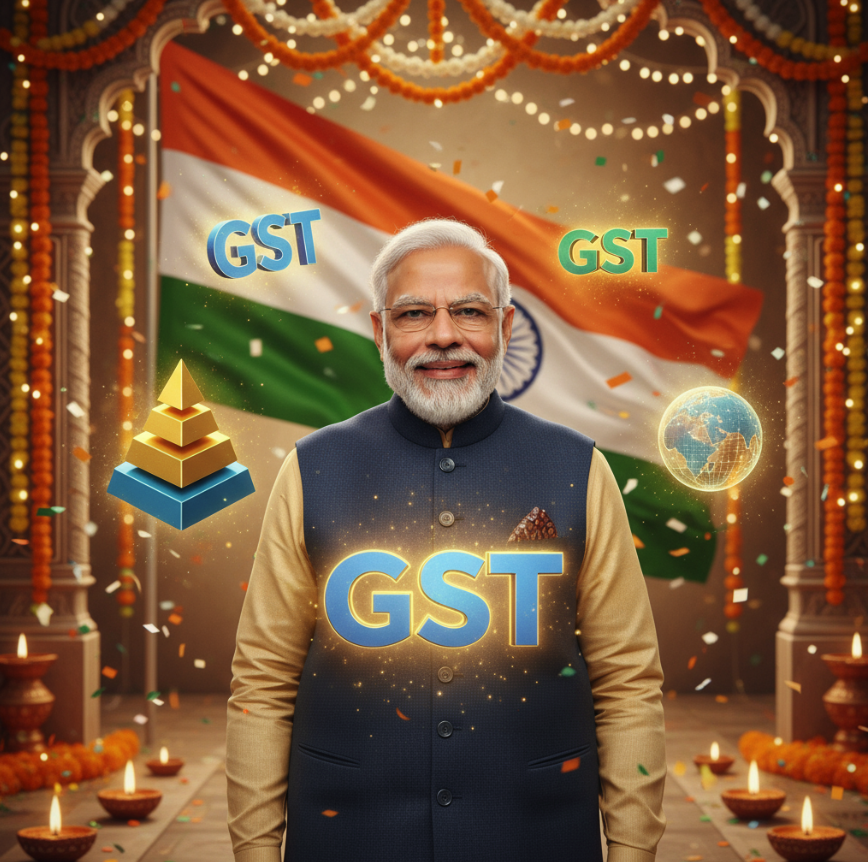
Prime Minister Narendra Modi, in a national address today, unveiled sweeping reforms to India’s Goods and Services Tax (GST), describing them as a “historic Diwali gift” for citizens. Effective September 22, 2025, the new GST structure will simplify tax slabs and reduce rates, making essential goods and services more affordable.
Key Highlights of the Reform:
-
Simplified Slabs: GST will now operate on two key slabs – 5% and 18%. Most consumer goods, medicines, food products, and insurance services will see tax reductions, with 99% of items earlier taxed at 12% moved to the 5% bracket.
-
Tax Relief: The income tax exemption limit has been raised to ₹12 lakh, coupled with GST relief, expected to generate national savings worth ₹2.5 lakh crore.
-
Boost to Self-Reliance: Modi urged states to create investment-friendly environments, strengthen local manufacturing, and support the ‘Aatmanirbhar Bharat’ and swadeshi campaigns.
Focus on Self-Reliance & MSMEs
The Prime Minister stressed the importance of buying and selling Indian-made goods to safeguard national prosperity amid uncertain global trade dynamics. He underscored the role of MSMEs as the backbone of India’s economy and a key driver of self-reliance.
Relief for Households and the Middle Class
Calling the GST reform a “historic Diwali gift,” Modi said it would bring convenience and financial relief to the poor, middle class, and the growing neo-middle class. He noted that over 25 crore people have risen out of poverty in the past 11 years, strengthening India’s consumer base.
Nationwide Response
State leaders, including Yogi Adityanath and Pushkar Singh Dhami, welcomed the reforms, highlighting benefits across sectors such as essentials, vehicles, housing, steel, and cement.
With these changes, the government aims to make goods more affordable, empower domestic industries, and reinforce India’s economic independence through swadeshi-driven growth.