
 By themediahives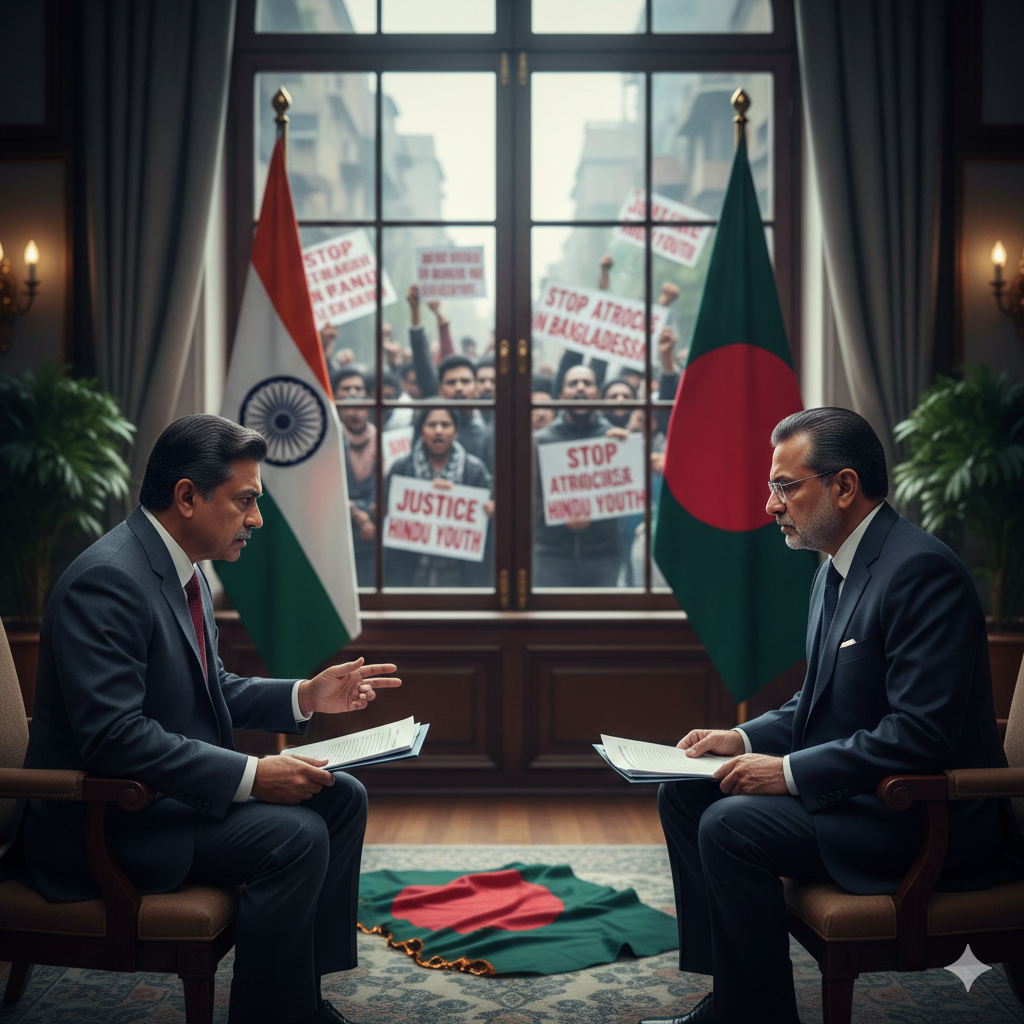
New Delhi, December 24, 2025 – India-Bangladesh relations have plunged into their deepest crisis since 1971, marked by violent protests, border tensions, and diplomatic standoffs that threaten regional stability.[1][2] Recent unrest in Bangladesh, including attacks on minorities and Indian interests, has prompted India to summon envoys and restrict visas, escalating mutual distrust.
Hundreds gathered in New Delhi to protest the killing of a Hindu man in Bangladesh, demanding justice amid rising anti-India sentiment in Dhaka. Counter-demonstrations outside Indian missions in Bangladesh led to temporary visa center closures and MEA security alerts.[5][6] This follows political upheaval after Sheikh Hasina’s ouster and death sentence, fueling nationalist rhetoric.
## Border Flashpoints Intensify
India bolstered troops at key chokepoints along the 4,096 km border, citing risks from smuggling, infiltration, and militancy amid Dhaka’s instability. In the Bay of Bengal, a Bangladesh Navy vessel collision sank an Indian fishing boat, killing a fisherman and sparking provocation accusations with mutual territorial claims.[10]
## Political Shifts Fuel Crisis
Bangladesh’s interim regime, less India-friendly, has deepened ties with China and Turkey, challenging New Delhi’s influence India’s parliamentary panel warns of risks to connectivity, energy, and trade, urging high-level talks. The Teesta River water-sharing dispute lingers, with Bangladesh alleging upstream hoarding.[11]
## Economic Fallout Mounts
As India’s top South Asian trade partner, Bangladesh faces tariff hurdles, transit fees, and visa curbs stalling garment exports. The MEA panel calls for trust-building through people-to-people ties and water treaties.
Experts urge immediate dialogues on security, water, and trade to revive ties under India’s Neighborhood First policy.Without de-escalation, broader instability and economic losses loom for both nations.