
 By themediahives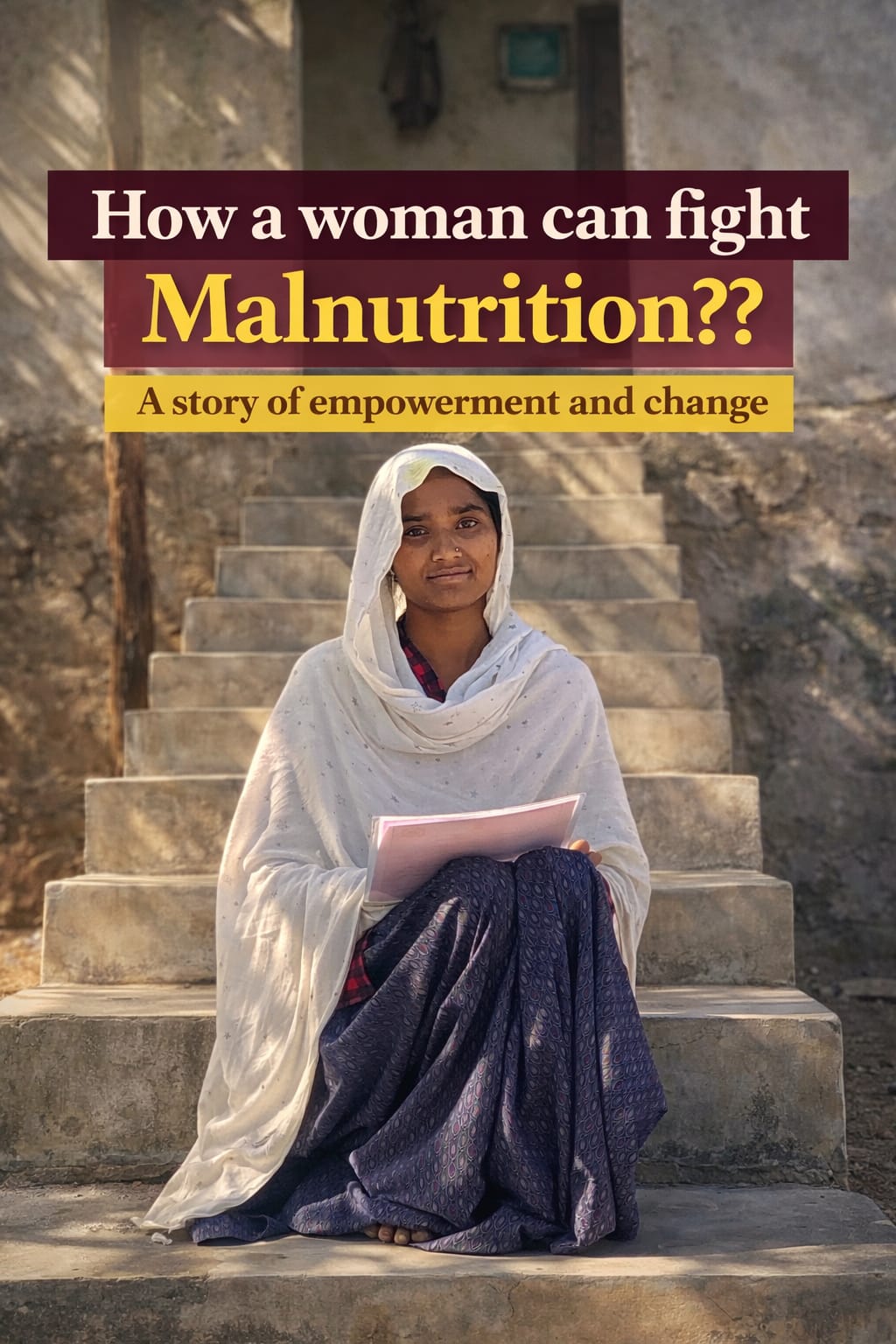
Banaskantha, Gujarat
Malnutrition remains one of the most persistent public health challenges in India’s rural and tribal regions, despite decades of policy interventions and welfare schemes. In the tribal villages of Danta taluka in Banaskantha district, this challenge is not merely about food scarcity, but about awareness, access, and agency, especially among women.
As part of the Masters of Mass Communication and Journalism (MMCJ) curriculum under the Department of Journalism and Communication, Gujarat University, a rural internship was conducted in Danta district to understand grassroots realities through direct engagement. The internship involved surveys of children identified under red and yellow malnutrition zones, field observations, and interactions with families, Anganwadi workers, and local communities.
What emerged from this fieldwork was a striking insight: women’s awareness and confidence play a decisive role in determining child health outcomes, often more than income levels or formal education.
Malnutrition on the Ground: Beyond Statistics
Danta is home to several Adivasi communities that depend largely on agriculture, daily wage labour, and seasonal migration. While government nutrition programmes exist on paper, malnutrition remains visible in everyday life: thin arms, stunted growth, frequent illness, and delayed development among children.
During the internship, surveys were conducted among children categorised under red (severe malnutrition) and yellow (moderate malnutrition) zones. While poverty was a recurring theme, it quickly became evident that lack of awareness was equally responsible for poor nutrition outcomes.
A Woman Who Stood Out
Among the many interactions during the survey, one woman from Gazipur village stood out. She was the mother of a malnourished child, yet her level of awareness, confidence, and decision-making ability sharply contrasted with others in similar socio-economic conditions.
Despite limited formal education, she demonstrated a clear understanding of child health, nutrition, family planning, and public welfare systems. Her responses reflected maturity, critical thinking, and leadership qualities rarely acknowledged in rural women by conventional metrics.
She openly spoke about her desire to complete her education, acknowledging that family and economic responsibilities had prevented her from reappearing for her Class 10 examination. Yet, this aspiration itself reflected a mindset oriented towards self-improvement and long-term thinking.

Family Planning as a Conscious Choice
In many tribal communities, large family sizes are often normalised. However, this woman expressed a firm belief that raising two children with proper care is better than having many children without adequate resources.
Her perspective reflected awareness of economic realities and the long-term consequences of neglect. This mindset directly influences child nutrition, healthcare access, and emotional well-being.
Such conscious decision-making is significant in regions where early marriage, repeated pregnancies, and lack of reproductive health awareness contribute to poor maternal and child health outcomes.
Awareness of Public Systems and Entitlements
One of the most revealing aspects of the interaction was her awareness of government documentation and entitlement systems. She possessed an NFSA ration card and openly discussed irregularities in ration distribution, including corruption by ration shop owners who provide less than the entitled quantity.
This level of awareness is uncommon in many tribal areas, where families often accept systemic failures as normal. Her ability to identify and question these issues demonstrated social awareness and civic understanding.
In contrast, many families surveyed during the internship were unaware of basic welfare schemes, including healthcare benefits available under government programmes.
Healthcare Choices and Nutrition Practices
Despite having a malnourished child, the woman was well-informed about her child’s medical condition. She was aware of ongoing investigations related to liver health and prioritised regular medical follow-ups.
Importantly, she made conscious dietary choices. She avoided spending money on packaged and processed food, choosing instead to invest in fruits and nutritious items whenever possible. This decision reflects an understanding of nutrition that goes beyond affordability and directly counters the growing influence of low-cost, unhealthy food options in rural markets.
Her approach highlighted how informed mothers can make better nutritional decisions even within limited means.
Personal Awareness and Responsible Behaviour
The woman also spoke candidly about her habit of consuming tobacco, acknowledging its harmful effects and her struggle to quit. However, she stated that she abstained from tobacco use during pregnancy, demonstrating responsible behaviour during critical health phases.
Such honesty and self-awareness underline the importance of health education that encourages informed choices rather than moral judgement.
Challenging Domestic and Social Norms
In discussions about family dynamics, the woman expressed strong views against domestic violence and alcohol abuse. While acknowledging that her husband occasionally consumed alcohol, she made it clear that she would not tolerate violence.
She also critically analysed the traditional ‘Ver Pratha’ prevalent in tribal communities, linking it to alcohol consumption among men. Her ability to question and interpret social practices indicated a level of critical consciousness rarely associated with women in marginalised settings.
Women’s Awareness and Child Health: A Direct Link
This case highlights a crucial reality: women’s awareness is a powerful determinant of child health. Mothers are the primary caregivers and decision-makers in daily household matters, including food preparation, hygiene, healthcare, and emotional support.
When women understand nutrition, health systems, and child development, they are better equipped to:
- 1.Monitor their children’s growth
- 2.Recognise early signs of illness
- 3.Seek timely medical care
- 4.Utilise available nutrition services effectively
Even in resource-constrained environments, informed mothers act as the first line of defence against malnutrition.
Government Schemes: Strong on Paper, Weak on Reach
India has introduced several schemes aimed at women’s empowerment, health, and nutrition. These include programmes related to skill development, financial inclusion, maternal welfare, education, and tribal development.
However, field observations in Danta revealed that many tribal women remain unaware of these schemes or unable to access them due to documentation barriers, administrative complexity, and lack of local facilitation.
Schemes often assume a basic level of awareness, literacy, and mobility that does not exist in remote tribal settings. As a result, benefits reach only a small section of the population usually those already connected to NGOs or local leadership.
Why Awareness Matters More Than Skills Alone
Many government and NGO programmes focus on vocational skills, entrepreneurship, or credit access. While these initiatives are valuable, their effectiveness remains limited when women lack foundational awareness about:
- 1.Health and nutrition
- 2.Family planning
- 3.Legal rights
- 4.Documentation
- 5.Welfare systems
In tribal areas like Danta, women’s immediate challenges revolve around child health, food security, and navigating public systems not market-oriented skills alone.
The case from Gazipur village demonstrates that awareness-based life skills can have a more immediate and sustainable impact than technical training disconnected from daily realities.
Learnings for Development Communication
From a journalism and communication perspective, this rural internship offered vital insights into development reporting. It revealed how gaps in communication not just resources contribute to persistent social problems.
Policies and schemes often fail not because they are poorly designed, but because they are poorly communicated. This places responsibility on media, educational institutions, and communication professionals to bridge the gap between policy intent and public understanding.
Role of Journalism Students in Social Reporting
For students of journalism, rural internships provide an opportunity to move beyond textbooks and engage with lived realities. Reporting from villages like Danta requires sensitivity, ethical responsibility, and an ability to listen.
Such experiences reinforce the idea that journalism is not merely about events, but about voices that often go unheard.
Way Forward: Awareness-Centric Approaches
The findings from Danta suggest that addressing malnutrition in tribal areas requires a shift in approach. Awareness-building must become central to development programmes, especially those targeting women.
Key focus areas should include:
- 1.Nutrition and child health education
- 2.Documentation and entitlement awareness
- 3.Strengthening grassroots support systems
- 4.Encouraging confident women as peer leaders
Conclusion
The rural internship in Danta, Banaskantha highlights a simple yet powerful truth: empowered and aware women can transform child health outcomes, even in the most resource-limited settings.
Malnutrition is not just a nutritional issue, it is a communication issue, a gender issue, and a systemic issue. Bridging these gaps requires informed policy implementation, responsible journalism, and sustained grassroots engagement.
For students of journalism, such field experiences serve as a reminder that meaningful reporting begins where statistics end on the ground, among people, and within everyday lives.
Article by – Toral Vagh ( MMCJ – Gujarat University )