
 By themediahives
 Designing a Greener Future with Intelligent Technology, In today’s hyper-digital era, conversations around growth are incomplete without addressing sustainability. For decades, growth has been measured in scale, speed, and profitability. But the paradigm is shifting. The new benchmark is responsible growth—where technology not only accelerates business outcomes but also minimizes environmental impact.
The convergence of Artificial Intelligence (AI), Automation, and Process Engineering is no longer just about efficiency—it is about engineering a sustainable future.
The Shift: From Digital Growth to Responsible Growth
Traditionally, businesses adopted technology to optimize costs and improve productivity. However, with rising concerns around climate change and energy consumption, the narrative is evolving.
Today:
- Data centers alone contribute ~1–1.5% of global electricity consumption
- AI model training can emit as much carbon as 5 cars over their lifetime (MIT research estimates)
- Inefficient digital processes lead to unnecessary compute cycles, increasing energy waste
This highlights a crucial reality: Technology can either accelerate environmental damage—or become the most powerful tool to prevent it.
AI & Automation: The Double-Edged Sword
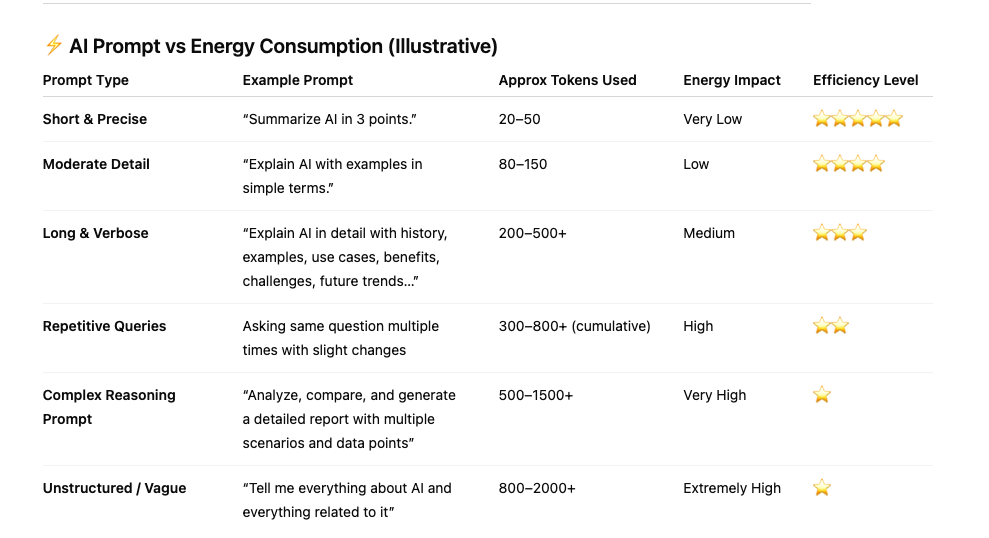
AI and automation are truly a double-edged sword—while they can consume significant energy through large-scale computation and data processing, their real impact depends entirely on how they are used. When applied carelessly, with excessive tokens, over-complex models, or always-on systems, they become a hidden source of energy waste; however, when used intelligently, they can optimize processes, reduce inefficiencies, minimize resource consumption, and even lower overall carbon footprints across industries. In essence, AI does not inherently harm or help the environment—it amplifies human intent, making smart, efficient, and mindful usage the key to turning technology into a force for sustainability.
When Used Inefficiently:
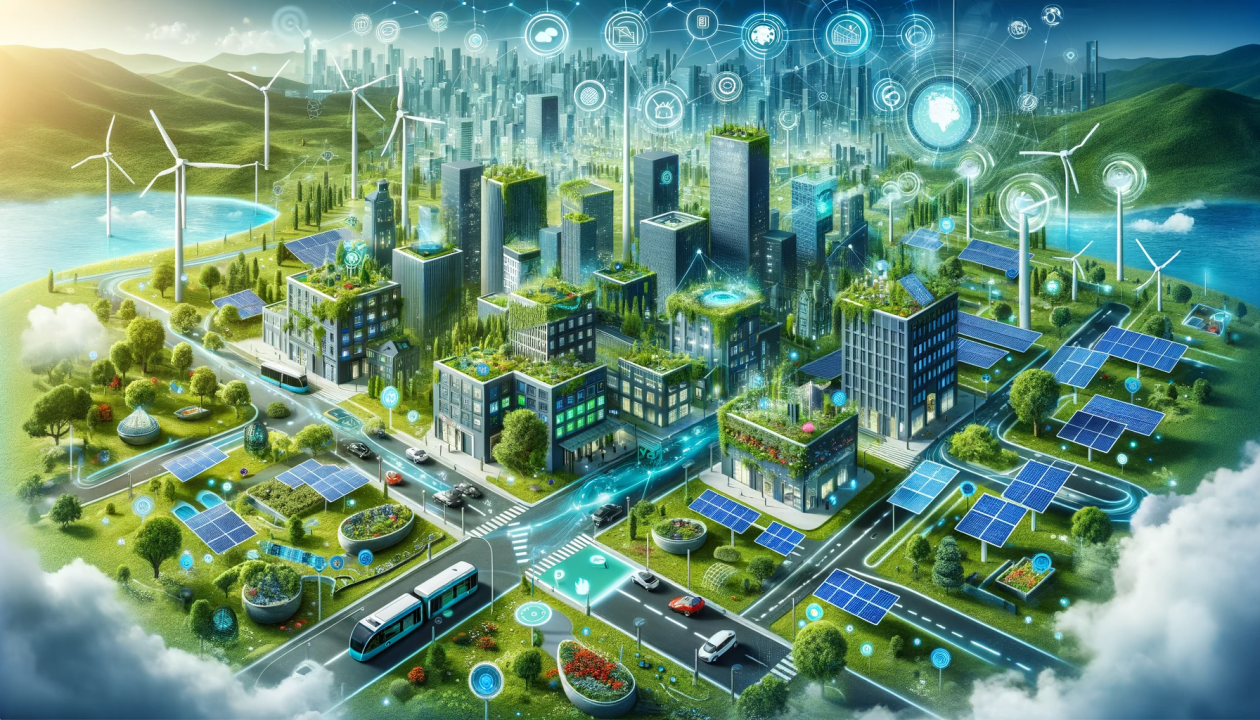
- Excessive data processing increases server load
- Redundant automation workflows waste compute power
- Poorly optimized AI models consume unnecessary tokens and energy
When Used Intelligently:
- AI reduces manual processes, cutting operational waste
- Automation minimizes resource dependency
- Smart systems optimize energy usage in real time
👉 The difference lies in design thinking and process engineering.
Design thinking ensures that you first understand the real problem and user need—so you build or use AI only where it truly adds value, avoiding unnecessary complexity and overuse. Process engineering, on the other hand, structures how AI is integrated into workflows—optimizing steps, reducing repetition, minimizing token usage, and eliminating inefficiencies. When both are applied correctly, AI systems become lean, purpose-driven, and energy-efficient; without them, the same technology turns into an over-engineered, resource-heavy system that consumes more energy than it saves
Key Insight: Token Economy & Energy Consumption
A lesser-known but critical factor in AI sustainability is token usage.
A lesser-known but critical factor in AI sustainability is token usage, because tokens are the basic units of text that AI models process—and every token requires computation, which in turn consumes energy. The more tokens you use (long prompts, repeated queries, verbose outputs), the more processing power is needed across data centers, increasing electricity usage and carbon emissions.
This creates a direct relationship: more tokens = more compute = more energy consumption. By adopting a “token economy” mindset—writing precise prompts, avoiding redundancy, and limiting unnecessary output—you not only improve efficiency and response quality but also reduce the environmental footprint of AI usage. In simple terms, every optimized prompt is a small but meaningful step toward greener technology.
Every AI interaction:
- Requires compute power
- Consumes electricity
- Generates carbon footprint indirectly
Practical Awareness:
- Shorter, precise prompts = fewer tokens = less energy
- Optimized workflows = reduced server cycles
- Batch processing = lower computational redundancy
Insight: If millions of users reduce even 10–15% of unnecessary AI usage, the cumulative energy savings can be significant at a global scale.
Building Green + Intelligent Systems
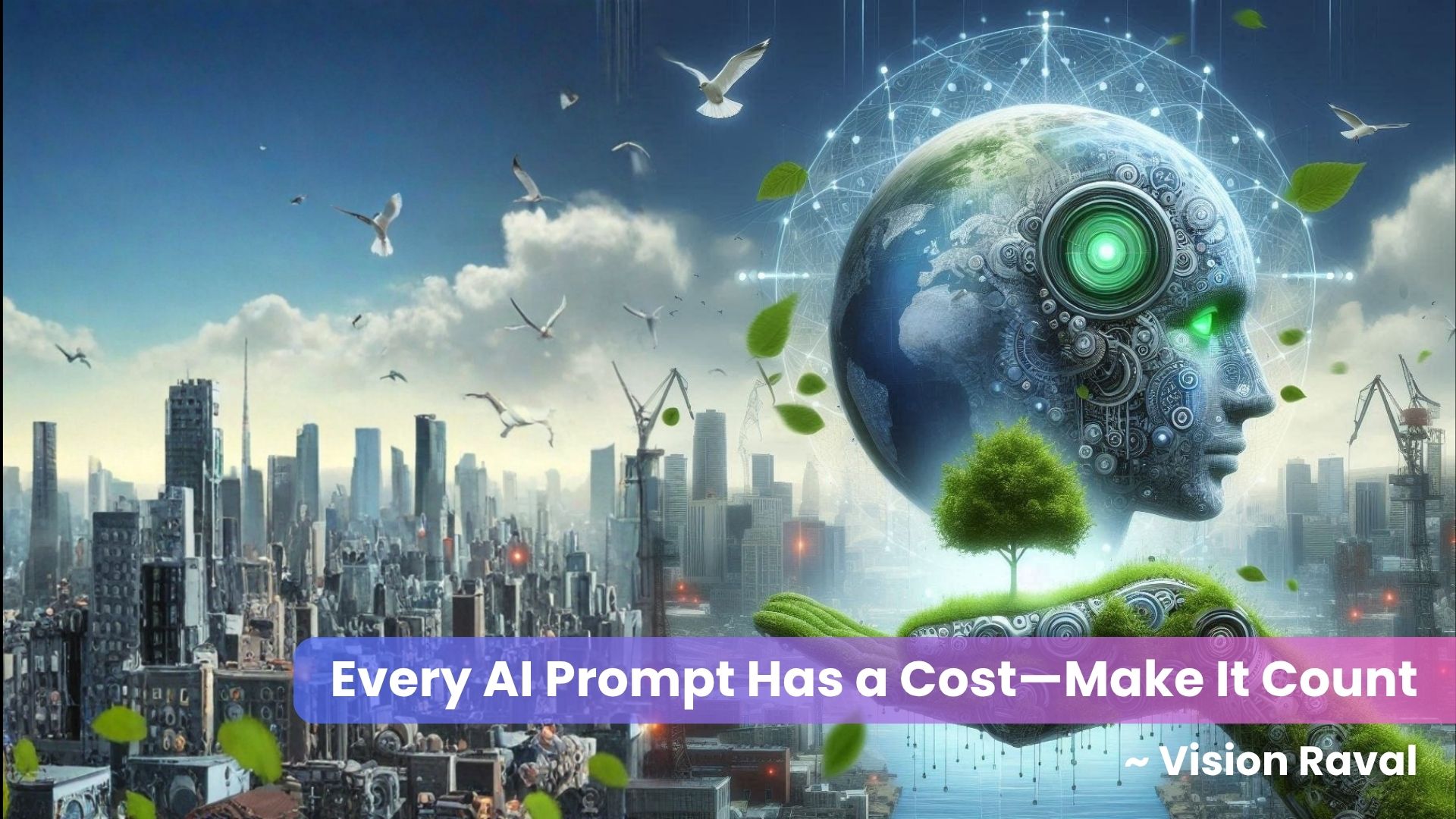
The future belongs to businesses that integrate sustainability at the design level, not as an afterthought.
The future belongs to businesses that integrate sustainability at the design level, not as an afterthought, because decisions made early in system architecture determine long-term energy consumption and environmental impact. When sustainability is embedded from the start—alongside AI, automation, and process engineering—systems are built to be efficient by default, not corrected later at a higher cost.
This means selecting the right models instead of the most complex ones, designing workflows that minimize redundant computation, optimizing token usage, and ensuring automation runs only when needed. It also involves aligning technology with resource efficiency—reducing energy, waste, and operational overhead simultaneously. In contrast, retrofitting sustainability after deployment often leads to patchwork fixes with limited impact.
True “Green + Intelligent Systems” are those where performance, scalability, and sustainability are engineered together, creating solutions that not only drive growth but do so responsibly and efficiently.
Core Principles of Green Tech Architecture:
1. Process Optimization First
- Eliminate inefficiencies before applying automation
- Avoid “automating waste”
2. Smart AI Deployment
- Use AI where it creates real value
- Avoid over-engineering solutions
3. Energy-Aware Infrastructure
- Cloud optimization
- Efficient data storage practices
- Reduced idle computing
4. Minimalism in Digital Operations
- Lean workflows
- Precise data usage
- Reduced redundancy
The Rise of the GrowthTech Mindset
We are entering an era where businesses must think beyond digital transformation.
The next evolution is:
AI + Automation + Process Excellence = Sustainable Growth
This is what I call the GrowthTech approach— where scalability is aligned with sustainability.
Organizations that adopt this mindset:
- Reduce operational costs
- Improve efficiency
- Strengthen brand responsibility
- Future-proof their business
Real Innovation = Responsible Innovation
The biggest misconception today is that innovation equals complexity.
In reality:
The most powerful innovation is the one that reduces waste, saves energy, and creates long-term value.
Automation alone is not innovation. AI alone is not transformation.
Sustainable, intelligent systems—that’s real innovation.
Action Points for Businesses & Individuals
To truly “Go Green with Tech,” here are practical steps:
For Businesses:
- Audit digital energy consumption
- Optimize AI models and reduce unnecessary workloads
- Design lean automation workflows
- Invest in sustainable cloud practices
For Individuals:
- Use AI tools consciously (avoid repetitive, unnecessary queries)
- Prefer efficiency over volume
- Support businesses adopting green technology
Final Thought
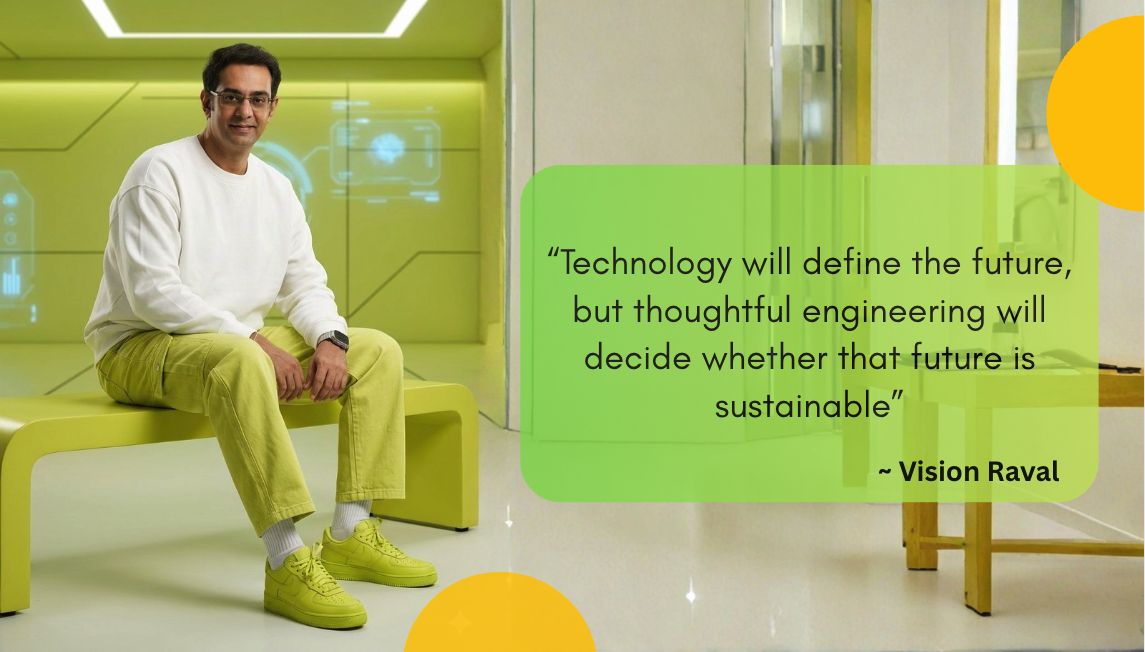
We are not just building digital systems anymore. We are engineering the future.
We are no longer in an era where technology is built just to function or scale—we are in an era where every digital decision carries a real-world impact. Every AI model deployed, every automated workflow designed, and every system scaled contributes not only to business growth but also to energy consumption, resource utilization, and environmental footprint. This is why we are not merely building digital systems anymore—we are engineering the future itself.
And that future must be:
- Efficient
- Scalable
- Sustainable
Because growth is no longer just digital— it is responsible too.
Article By
– Mr. Vision Raval
(AI-Robotics-Automation-IoT and FutureTech Expert)