
 By themediahives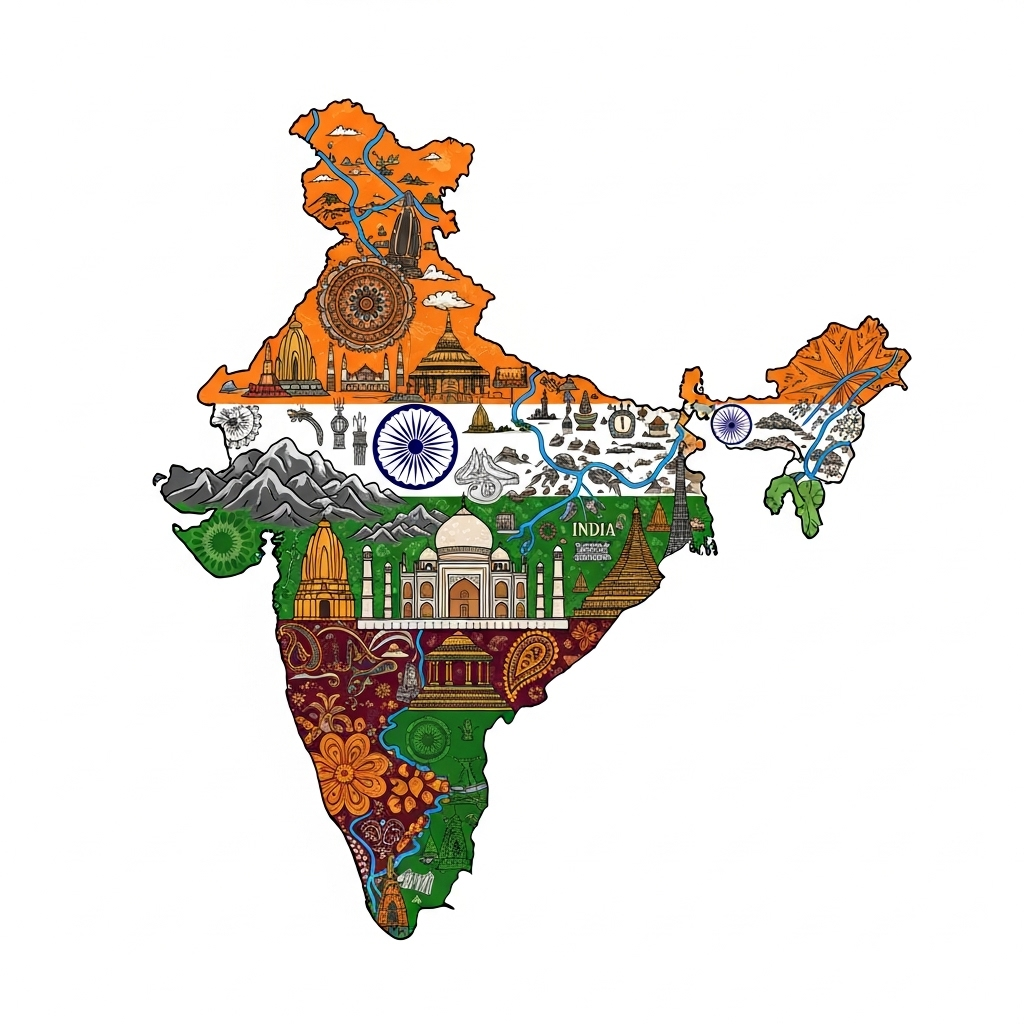
The culture of India from Kashmir to Kanyakumari.
- Kashmir – It blends Hindu , Buddhist and Islamic influences. People wear long pheran cloak , enjoy wazwan feasts and celebrates with dances like Rouf and Music Chakri. The highest population of Kashmir is the culture of Islam – 97%, and other is the Hindu culture – 2-3% and Buddhist culture – 0.9%.
- Himachal Pradesh – It has the vibrant culture. They have folk dances like Nati which is celebrated on festivals like Shivaratri. Hindi and Pahari languages are spoken there.
- Punjab – Its culture is vibrant and energetic. Its folk dances are Bhangra and Giddha performed at harvested festivals. People wear phulkari dupattas for women and turban for men. Their festivals are Diwali and Gurupurabs. Their famous food is Makki di roti , sarson da saag and lassi.
- Uttarakhand – Its culture is Garhwali and Kumaoni , their folk dances are Johar and Chholiya during festivals like Harela and Kumaoni Holi. Their food is simple mountainous foods.
- Haryana – They have folk dances like Dhamaal and Loor during festivals such as Teej, Lohri, etc. Colorful ghagra – choli are worn by women and kurta , dhoti are worn by men. The famous food is bajra khichdi , rabdi and kadhi.
- Sikkim – they have mix cultures of Lepcha, Bhutia and Nepali tradition with strength of Buddhist influence. They have festivals like Losar and Saga Dhawa celebrated with the folk dances like Chaam . Women and men both wear vibrant robes. Their local food is momos, thupka, etc.
- Arunachal Pradesh – It has the culture of 100 ethnic groups. For example .. Adi , Nyishi , etc. They worship nature Doni polo. They celebrate harvested festivals like Solung and Mopin. Their famous food is rice beer, bamboo shoot curries, and soaked meats. Their traditional craft is handmade shawls, bamboo crafts, etc.
- Rajasthan – They have the culture of royal vibrancy. Their folk dance is Ghoomar and Kalbelia which is celebrated during festivals like Teej, Gangaur and Desert Festival in Jaisalmer. Women wear beautiful ghagra cholis and men wear the bright turbans. Their famous food is dal-batti, laal maas, ghevar. Their traditional craft is block prints, blue pottery, etc.
- Uttar Pradesh – Hindu tradition with Mughal influence. Women wear colourful sarees and salwar kameez as men wear dhotis and kurtas. They mostly eat food like kebabs and chaats. Their folk dance is kathak dance which is celebrated on festivals like Kumbh mela.
- Bihar – It has a vibrant culture with mix ancient tradition, religious diversity and rural life. They have festivals like Chhatt puja. Their traditional craft is Madhu Bani Paintings. Their folk dances is Jat Jatin. Their famous food is Litti Chokha. Their folk music is Bhojpuri and Maithli.
- Assam -Its culture is ethnic influences like Mangoloid, Aryan, etc. their famous festivals are Bihu dance ,Sattriya dance, and Vaishnavite practices by saints like Srimanta Sankardev highlights spiritual and artistic depth. They have symbols like gamosa cloth. Their famous traditional craft is bamboo weaving.
- Nagaland – It has 17 major tribes with unique traditions . They have festivals like Hornbill. Their famous craft is handwoven shawls. Their famous food is steamed meat, fermented dishes with ghost peppers, etc. they perform lively dances during the harvested celebrations.
- Manipur – a vibrant northeastern Indian state known for its diverse tribal cultures and rich traditions shaped by Meitei and hill communities. Festivals like Lai Haraoba and Sangai feature classical Ras Leela dance, Traditional attire includes the Phanek sarong for women and warrior-like turbans for men. During rituals Cuisine is rice, fermented fish (ngari), and local greens, with dishes like Iromba (spicy veggie mash) and Chak-hao kheer (black rice pudding)
- Gujarat -, is known for its rich cultural heritage and warm hospitality. Its traditions revolve around colourful festivals like Navratri, with Garba and Dandiya dances filling the air with joy. Gujarati culture emphasizes family values, vegetarianism, and intricate crafts like Bandhani textiles. Food in Gujarat is a delightful mix of sweet, spicy, and tangy flavours, mostly vegetarian. Iconic dishes include dhokla, fafda-jalebi etc.
- Madhya Pradesh -, known as the “Heart of India,” tribal celebrations such as Bhagoria and Karma, featuring lively folk dances like Gaur Maria, Matki, and Lathi.
Gond paintings, Chanderi and Maheshwari sarees, and tribal jewellery that reflect community stories.
- Chhattisgarh – Chhattisgarh, known as India’s rice bowl. The state celebrates various colourful festivals like Bastar Dussehra and Rajim Kumbh, and rhythmic folk dances such as Raut Nacha, Pandwani, and Karma. Cuisine highlights rice-based dishes like roti, bhat, farra, muthia, etc.
- West Bengal – the culture deeply rooted in festivals like Durga Puja, where colorful pandals and idol immersions unite communities. Bengali cuisine centers on rice and fish, with favourites like machher jhol, sweets such as rosogolla, and street foods including puchka. This cultural mosaic, from Kolkata’s buzz to village rhythms, celebrates simplicity, spirituality, and communal joy.
- Tripura – Home to 19 indigenous communities like Tripuris, Reangs, and Mogs, it blends Hindu traditions with unique tribal customs, celebrated through festivals like Garia Puja, Kharchi Puja, and Ker Puja. Tripura’s food is mostly non-vegetarian, featuring bamboo shoots, seafood, pork, and chicken in dishes like Mui Borok (fermented fish), Wahan Mosdeng (pork curry), Chokwi (pork with bamboo), and Chakui Pitha (rice cake).
- Mizoram – Mizo culture emphasizes community harmony, with Christianity shaping daily life since most residents converted in the 19th century, blending ancient animist roots in modern festivals. Traditions include vibrant Chapchar Kut spring harvested dances and Pawl Kut thanksgiving feasts, featuring group singing, bamboo dances (Cheraw), and rice beer Zu shared communally. Intricate handwoven Puan shawls symbolizing identity, passed down through generations.
- Maharashtra – Its culture thrives on festivals like Ganesh Chaturthi, where modak offerings symbolize devotion, and Gudi Padwa with sweet puran poli, reflecting deep Hindu traditions. Traditions emphasize thali-style meals, regional diversity from Konkan rice curries to Deccan pithla-bhakri, and street foods tying communities together. Folk elements shine in Lavani dance-dramas with vibrant music and Tamasha performances.
- Odisha – Its culture thrives around festivals like Rath Yatra and Durga Puja, featuring intricate Patta Chitra paintings, Odissi classical dance, and applique work from Pipili. Traditions emphasize devotion to Lord Jagannath, with rituals involving sacred rice dishes like Kanika during celebrations, reflecting a satvik (pure) lifestyle. Folk arts include Sambalpuri folk music, Chhau tribal dance, and Dalkhai songs sung during agrarian festivals.
- Goa – Its culture reflects Hindu, Catholic, and colonial traditions, with vibrant festivals like Carnival, Shigmo, and Sao Joao uniting communities in music, dance, and feasts. Folk dances like Fugdi (women’s circle dance) and Dekhni (narrative songs) thrive during celebrations, accompanied by instruments like the ghumat drum.
- Karnataka – Its culture blends Dravidian heritage with vibrant festivals like Ugadi and Dasara, classical Yakshagana theater, and intricate Mysore silk weaving, reflecting devotion and community spirit. Traditions emphasize temple prasadam such as Mysore pak and Hayagreeva maddi, served on banana leaves during rituals, alongside rhythmic folk dances like Dollu Kunitha with drums. Folk arts thrive in rural performances of Veeragase and Kamsale.
- Telangana – Its culture blends Telugu traditions with Nizam-era Mughal influences, evident in grand festivals like Bonalu and Bathukamma, where vibrant floral offerings and communal feasts celebrate deities. Traditions emphasize hospitality, with millet-based rotis (sajja, jonna) and tangy pulihora rice central to rural agrarian life and events like Sankranti. Folk arts thrive through energetic dances like Perini Shiva Tandavam.
- Andra Pradesh – Andhra Pradesh boasts a vibrant culture deeply rooted in Telugu traditions, festivals like Sankranti and Ugadi, and classical arts such as Kuchipudi dance. Folk traditions thrive through Burrakatha storytelling epics, Tappeta Gullu percussion dances, and Kolatam rhythmic stick dances performed during harvest celebrations.
- Kerala – Its culture blends Hindu, Christian, and Muslim influences, emphasizing communal harmony, classical arts like Kathakali dance-drama, and yoga traditions. Traditions include vibrant boat races (Vallam Kali) and Theyyam rituals, where performers embody deities in elaborate costumes. Folk arts thrive through Mohiniyattam dance and Pulayattam folk songs, reflecting the state’s diverse ethnic tapestry.
- Tamil Nadu – Traditional meals are often served on banana leaves, symbolising respect for nature and community values. Culture and festivals such as Pongal, Tamil New Year and Navaratri closely link food with rituals, gratitude for harvest and family gatherings. Folk life includes village festivals, local deities, folk dances and music that reflect agrarian life, spirituality and communal harmony.
- Jharkhand – Its vibrant culture thrives on tribal traditions from communities like Santhal and Oraon, emphasizing harmony with nature through festivals like Sarhul (spring worship), Karma (harvest dance), and Chhath Puja with communal feasts. Folk arts shine in colorful Sohrai and Khovar wall paintings depicting nature and harvests, while music and dances like Jhum, Paika, and Domkach use madal drums and bamboo flutes during celebrations.
Conclusion : India is a beautiful country which is full of natural beauty. In spite of different religions, foods, customs, rituals, languages and dressess, all people of India stay together and celebrating all festivals with full enthusiasm and joy. All the festivals on one or the other ways are connected with traditions. This journey is truly vibrant tapestry of UNITY IN DIVERSITY, blending ancient traditions with evolving flavours.
Article By Saumyaa M. Shah
(6E-H B Kapadia School)