
 By themediahives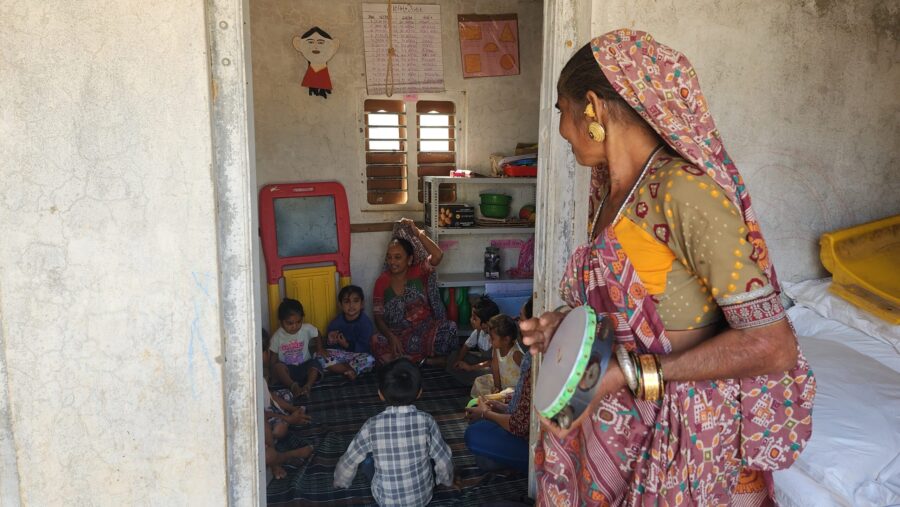
By Kavya V. Mehta
(Department of Communication and Journalism)
Master’s Student in Mass Communication and Journalism, a student pursuing a Master’s in Mass Communication and Journalism at Gujarat University, I recently completed a one-week rural internship at the Coastal Salinity Prevention Cell (CSPC) in Dwarka, Gujarat, in December 2025. This practical experience was an integral component of my academic pursuit to comprehend grassroots development and communication strategies within rural India. The Center for Social and Public Change (CSPC), a non-governmental organization dedicated to improving Early Childhood Care and Education (ECCE) within the Integrated Child Development Services (ICDS) framework, offered me a distinctive perspective on Anganwadis—India’s primary centers for child nutrition, health, and early education. Initially an orientation to teacher training, this experience evolved into profound insights regarding the pivotal role these fundamental centers play in establishing the groundwork for lifelong learning, particularly within underserved rural communities.
The internship provided me with an in-depth understanding of the daily operations of Anganwadis, showcasing their significant potential for positive change despite various obstacles. Through direct field visits and engaging with workers, helpers, parents, and children, I observed firsthand
how structured early education contributes to cognitive, social, and emotional development. This article is based on my observations and experiences, aiming to emphasize the crucial role of Anganwadis in early childhood education, substantiated by findings from recent research.
My Journey into the World of Anganwadis
The internship at CSPC offered a deep dive into the evolving role of Anganwadis as inclusive early childhood care and education (ECCE) centers. Since 2014, with intensified focus on teacher training from 2019, these traditionally nutrition-oriented spaces have shifted toward play-based, holistic learning—distinct from more structured preschools like Balvatika.
Simulated activities during orientation allowed us to experience this approach firsthand: acting as young “students,” we discovered how songs, games, and child-led routines naturally foster curiosity, independence, and responsibility.
Field visits across diverse settings revealed both the transformative potential and persistent challenges of Anganwadis.
Exemplary practices stood out in several centers. At places like Havad Pada and Gomti Ghat, dedicated workers—despite personal health constraints—modeled unwavering commitment. They sat on the floor with children, cultivated high attendance through enthusiasm and trust, and collaborated seamlessly with helpers to maintain smooth, hygienic, and joyful environments. Proactive steps, such as strength-based home visits, regular parent communication via WhatsApp, and borrowing TLMs for home reinforcement,
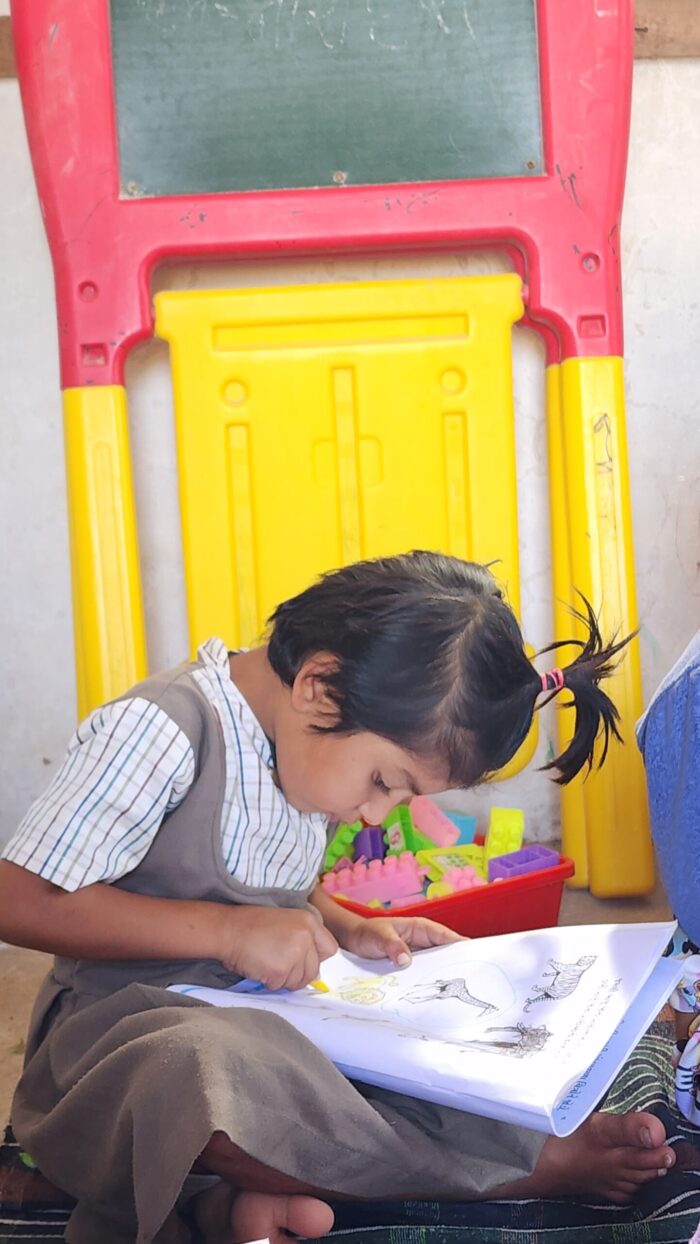
strengthened family engagement and extended learning beyond the center. A powerful example was four-year-old Vishwa, who transitioned from frustration in a private preschool to confidence and enthusiasm in her Anganwadi, thanks to patient caregivers, transparent updates, home visits, and consistent attendance incentives.
Community adaptation and resilience also shone through. In remote villages like Juni Devad, bilingual instruction (Kachchi and Gujarati) eased children’s transition, while creative solutions—such as arranged pick-ups—countered parental reluctance tied to farm work. Even in difficult circumstances, such as staffing shortages at Varvada Udyog or severe overcrowding at Gadh Area, helpers and workers maintained routines, cleanliness, and structure, demonstrating remarkable dedication under resource constraints.
Yet significant challenges persisted across sites. Inconsistent hygiene, outdated or incorrect Teaching-Learning Materials (TLM), safety hazards (exposed nails, children chewing plastic), and occasional facilitator frustration highlighted gaps in training, supervision, and infrastructure. Administrative burdens—online attendance tracking, BLO duties, and irregular child participation due to seasonal labor—often diverted workers from child-centered priorities. Gender imbalances appeared in parent involvement, with mothers dominating meetings, pointing to untapped opportunities for broader family participation. Some centers displayed an overly outcome-focused or anxious demeanor in the presence of visitors, contrasting with the relaxed, process-oriented ethos seen in stronger setups.
Overall, these experiences underscored Anganwadis’ unique
strengths: they offer respectful, low-pressure, community-rooted care that private preschools often lack, especially for vulnerable families. At their best, Anganwadis serve as nurturing foundations for lifelong learning, bridging rural–urban and socioeconomic divides through dedicated workers, local resources, and meaningful parent partnerships. Addressing inconsistencies in training, infrastructure, and administrative load remains essential to fully realizing their potential as equitable early education anchors.
The Vital Role of Early Childhood Education in Anganwadis
This internship experience has significantly enhanced my understanding of Anganwadis, recognizing their pivotal role in early childhood education, consistent with India’s National ECCE Policy. Research consistently highlights their critical importance:
– Boosts Cognitive Development: Structured early childhood education improves verbal comprehension, working memory, visual-spatial skills, and overall IQ, raising cognition scores by several points even after accounting for home environment and socioeconomic status (Koshy et al., 2024).
– Enhances School Readiness: Anganwadi centers with enhanced preschool curricula increase children’s knowledge of body parts, colors, numbers, prepositions, and gross-motor skills, leading to higher school-readiness scores before primary entry (Attanasio et al., n.d.).
– Promotes Socio-Emotional and Motor Skills: Center-based play and peer interaction foster better motor coordination, memory, concentration, and social-emotional growth, helping children overcome adverse experiences (Koshy et al., 2024).
– Improves Nutrition and Health Outcomes: Adding a dedicated early-childhood mentor provides home visits, nutritional counseling, and stimulation activities, targeting stunting and malnutrition under three (World Bank, 2016).
– Supports Policy Goals: India’s ECCE policy mandates Anganwadi delivery for ages 3-6, using mother-tongue instruction, multi-age grouping, and at least four hours daily, aligning with evidence raising later academic achievement (Koshy et al., 2024).
– Scalable Impact: Randomized trials show weekly home visits by trained women, combined with preschool curricula, generate measurable IQ and readiness gains, proving Anganwadi interventions can scale (Attanasio et al., n.d.).
These benefits were evident in Dwarka, where engaged centers produced enthusiastic, skilled children.
Conclusion
My Dwarka internship transformed my view of Anganwadis from mere nutrition hubs to essential learning foundations.
Despite challenges like infrastructure gaps and administrative burdens, dedicated workers and community ties create nurturing spaces. As India invests in ECCE, strengthening Anganwadis can uplift rural futures. This experience, blending journalism with development, inspires me to advocate for such grassroots stories.
References
– Koshy, B., Srinivasan, M., … & Kang, G. (2024). Structured early childhood education exposure and childhood cognition – Evidence from an Indian birth cohort. Scientific Reports, 14, Article 63861-8.
– World Bank. (2016, October 3). Impact Evaluation of an Additional Worker on Early Childhood Stimulation in India’s Integrated Child Development Services Scheme. Retrieved from https://www.worldbank.org/en/programs/sief-trust-fund/brief/impact-evaluation-of-an-additional-worker-on-early-childhood-stimulation-in-indias-integrated-child-development-services-scheme.
– Attanasio, O., Augsburg, B., Behrman, J., Day, M., Grantham-McGregor, S., … & Vernekar, N. (n.d.). Sequencing Two Early Childhood Interventions Back-to-Back in India. The Abdul Latif Jameel Poverty Action Lab (J-PAL). Retrieved from https://www.povertyactionlab.org/evaluation/sequencing-two-early-childhood-interventions-back-back-india.