
 By themediahives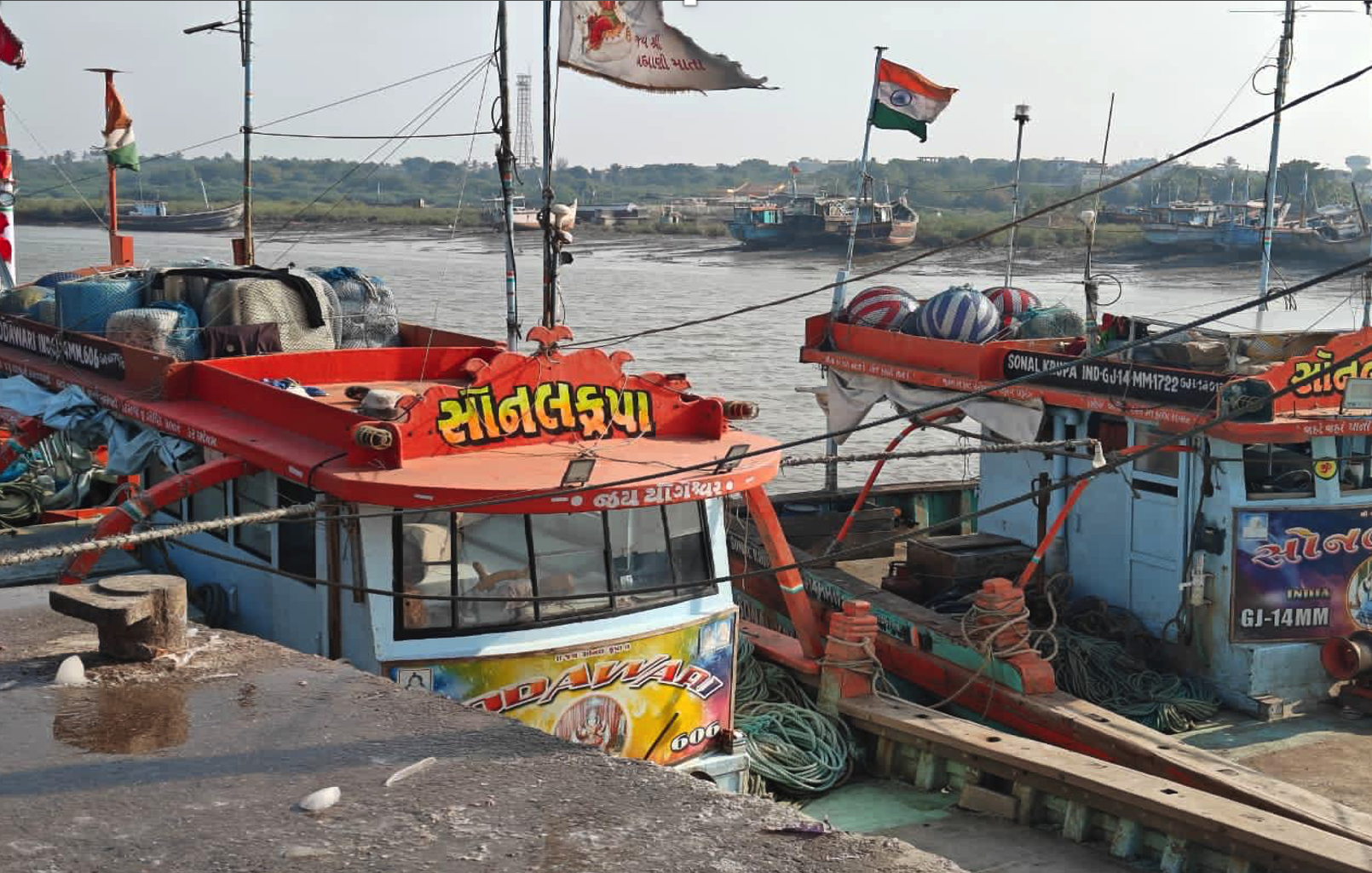
By Jeet N. Sorathiya
‘ The Sea Is Not Just Nature, It Is Livelihood’
Journalism to me, once seemed like a glamorous world of headlines and bylines. But as I wrap up two years of study, that image has transformed. My journey from the structured environment of classrooms to the unpredictable shores of coastal Gujarat revealed that journalism is less about fame and more about responsibility. It is a responsibility to society, to truth, and to the people whose voices we often overlook. This article reflects on my academic learning and, most importantly, on my rural internship.
In the classroom, we studied communication theories, media ethics, and the history of Indian journalism. These courses underscored that media operates within political and economic systems, and that news is shaped by power and resource dynamics. We debated issues like paid news, sensationalism, and the thin line between factual reporting and hidden agendas. These discussions made one thing clear: journalism’s power is immense, and with it comes an inevitable accountability. Rather than discourage me, this awareness deepened my commitment and made journalism feel more serious and meaningful.
Venturing into Coastal Gujarat
My rural internship took me to the villages of coastal Gujarat, mainly in Jafrabad taluka of Amreli district, where the sea is not just a backdrop but a lifeline. Jafrabad is home to thousands of fisherfolk who depend on the Arabian Sea for their daily bread.
Life here is dictated by the sea’s whims. Fishermen sail out at dawn with hopes of a good catch, yet they know the ocean can be unpredictable. I vividly remember one noon speaking with an elder fisherman, Ganeshbhai who quietly said, “Our hope is with the sea, but the sea is our master.” His words struck me. Modern equipment like GPS, digital fish finders, and stronger nets have made fishing safer and more efficient. But the cost of diesel, gear, and licenses weighs heavily on small boat owners. Many rely on loans to afford their boats and fuel, making each catch even more critical.
I spent a week living with a fishing family to understand their routines. Women prepare nets and dry fish on the shore. Every aspect of life is intertwined with the environment and community. As I journaled each day’s observations, I realized that doing journalism here meant more than seeking scoops it meant listening without bias, understanding people’s language, and capturing their stories with sensitivity.
Challenges of Development and Environment
The coastal communities of Jafrabad face a complex mix of opportunities and challenges. On one hand, Gujarat’s drive to develop ports and industry has brought some jobs and infrastructure to the region. In newer parts of the village, I saw roads paved and solar lights installed. But there is a downside: industrial development and pollution are starting to encroach on traditional fishing grounds. During one tour of the harbor, I observed effluent and waste from fish-processing units entering the water. Several fishermen said they no longer see the quantities of fish they once did.
This situation raises tough questions of environmental justice. Development projects ports, refineries, and factories are often touted as progress. Yet if they harm or exclude local communities, can the development truly be sustainable? One afternoon, I joined a meeting of local fisher leaders and government officials discussing a proposed desalination plant on the coast. Government engineers claimed it would bring much-needed freshwater for drinking and farming, Fishermen worried it might alter the salinity balance and further harm fish populations.
Another crisis in coastal Gujarat is salinity ingress into groundwater. Over-extraction of wells and rising sea levels have pushed saltwater inland in places like Jafrabad. A recent review of Gujarat’s coastal aquifers notes that seawater intrusion is “intensified and aggravated due to over-exploitation of groundwater, sea-level rise, and climate change”. For villages here, increased salinity means scarcity of drinking water. Many homes have no fresh water from taps, people often rely on tanker trucks or rainwater harvesting.
Migration: A Tide of Change
When the sea does not provide, many families feel forced to leave. In conversations with youth and elders, a recurring theme was out-migration. Young men and women spoke of going to cities like Rajkot or Ahmedabad to work in factories or construction when fishing income ran out. This migration is often framed as a sacrifice “for the children,” so they can access education or steadier pay. But it comes with social costs, such as families separating when one member migrates for work.
Empowering Through Communication
Throughout my fieldwork, one theme became clear: communication itself is a tool of empowerment. Traditional journalism skills gathering facts, verifying sources, storytelling took on deeper meaning on the ground. Reporting in Jafrabad was rarely about chasing headlines. Instead, it was about amplifying the voices of villagers and helping them understand issues. For example, the Coastal Salinity Prevention Cell (CSPC) team organizes regular Gram Sabhas (village meetings) and workshops.
Research suggests that this kind of development-focused journalism can have real impact. One review of journalism in fisheries argues that this style of reporting “fosters accountability, localized knowledge sharing and participatory communication”. By converting technical information (such as climate data or welfare schemes) into relatable stories, journalists can boost awareness and action. The same authors highlight that development journalism can promote accountability and stakeholder participation in co-management of fisheries.
Insights from Research
My observations in Jafrabad resonate with published research. For instance, a 2023 study of another coastal Gujarat village documents how adopting motorized bag-net fishing transformed that community’s livelihood. The authors note a “transition from food scarcity to food security” as mechanized fishing became widespread. In plain terms, the village shifted from a subsistence economy to a market-oriented one, with regular catches and even surplus produce to sell. Material well-being clearly improved.
Another relevant study comes from the journalism field itself. That 2025 review of development journalism in fisheries shows how locally relevant reporting can turn numbers into narratives. It emphasizes that by telling farmers’ and fishers’ stories, journalists make policies and technical data meaningful. For example, the authors point out that development journalism converts complex information into cultural narratives, enhancing both understanding and resource management. Crucially, they note development journalism’s potential to elevate underrepresented voices and improve fisheries governance.
These research studies reinforce a lesson I learned firsthand: context matters. Hard numbers such as tons of fish caught or milliliters of freshwater are important, but behind each statistic is a story of effort and adaptation. Integrating rigorous research with on-the-ground reporting gives a fuller picture. In Jafrabad, when I paired local voices with careful data, my stories became more credible and impactful. It taught me that as journalism student, we must be part storyteller, part analyst.
Conclusion
Looking back, my two years of journalism education and fieldwork have reshaped me. They taught me that journalism is never truly neutral it becomes ethical and impactful only through conscious effort and empathy. Walking along Jafrabad’s shores, I learned to see beyond the waves’ surface: every ripple affects a life. Journalism’s true value lies in service to truth, to communities, and to those who have often been voiceless. The core skills of ethics, empathy, and clear communication that I developed in my training guided me even in the field.
This journey is not the end, but a beginning. The media world will continue to change, and challenges like misinformation or environmental stress will only grow more complex. But the lessons I carry are timeless: report responsibly, listen actively, and put people first. In an age where information is abundant but trust is fragile, coastal communities need journalists who listen first and write second. Every story has a responsibility whether to inform policy, to spark solutions, or simply to honor those it portrays. For me, the sea is no longer just a view it is life itself, and every story I write is a tribute to those it sustains.
References
- Biswal, R. & Johnson, D.S. (2023). A social wellbeing approach to the gendered impacts of fisheries transition in Gujarat, India. Maritime Studies, 22(2), 13. doi:10.1007/s40152-023-00299-0
- Jogi, A., Kshatri, A.S., Ghidorey, G., Painkra, A. & Bhandari, J. (2025). Development journalism in fisheries: A review from the extension lens. International Journal of Agriculture Extension and Social Development, 8(11S), 162–170. doi:10.33545/26180723.2025.v8.i11Sc.2707
- Siddha, S. & Sahu, P. (2020). Status of seawater intrusion in coastal aquifer of Gujarat, India: a review. SN Applied Sciences, 2, 1726. doi:10.1007/s42452-020-03510-7