
 By themediahives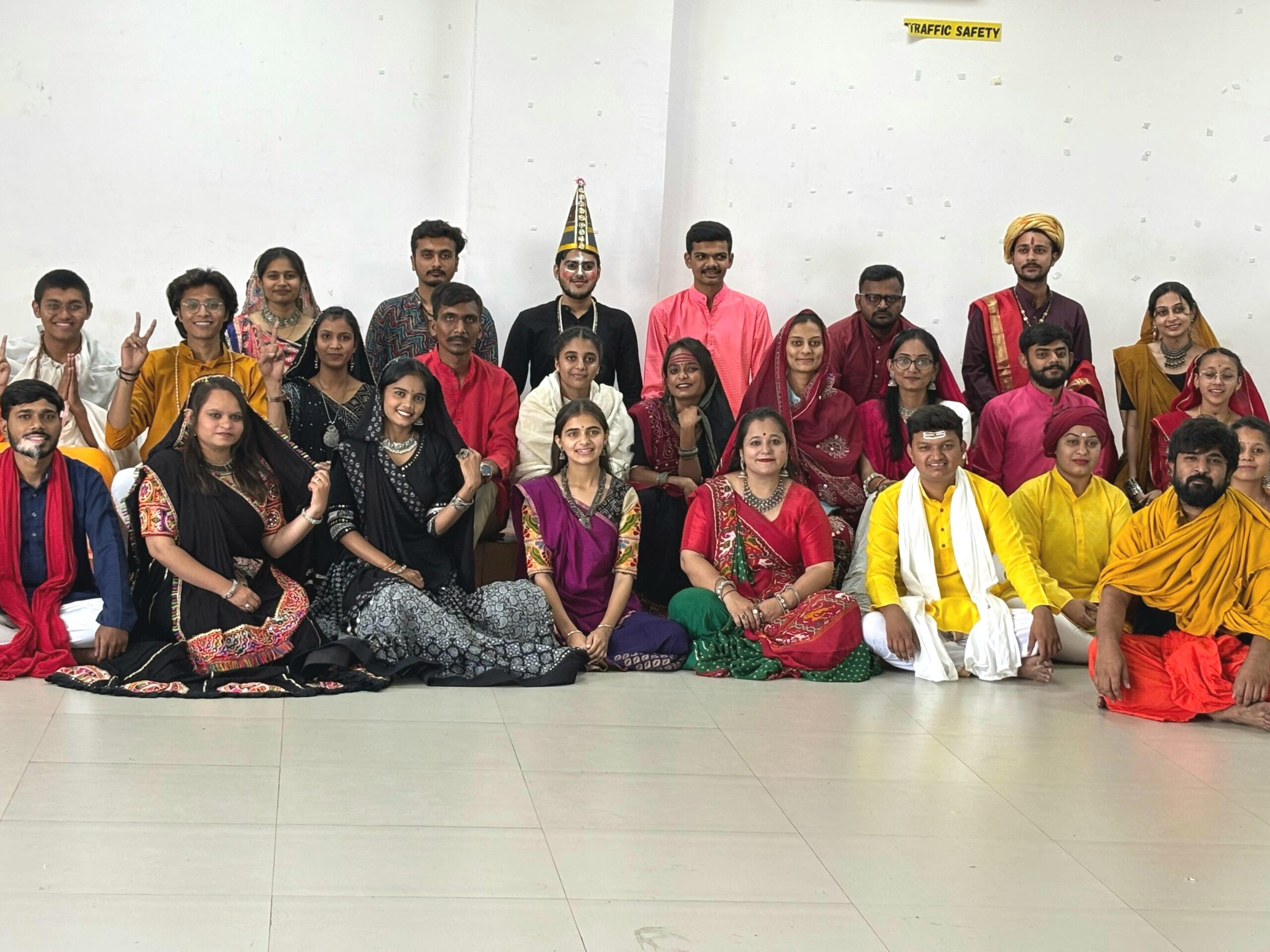
Training to Inform, Inspire, and Influence: A Journey
Introduction: Choosing Journalism as a Purpose, Not Just a Career
Choosing journalism was never a random or accidental decision for me. It was a conscious, thoughtful, and emotionally driven choice shaped by my deep curiosity about society, people, and the power of communication. From observing everyday life to questioning social realities, I always felt drawn toward understanding how narratives are created and how information shapes human behavior. Journalism, for me, is not merely a profession or a means of livelihood; it is a responsibility, a commitment, and a bridge between people and truth.
My journey as a student of the Master of Communication and Journalism (MMCJ) at Gujarat University became one of the most defining phases of my life. This journey was not confined to classrooms, textbooks, assignments, or examinations. It was a journey of self-discovery, confidence-building, emotional growth, creative exploration, and ethical understanding. Every lecture, workshop, production session, research project, and interaction helped me understand myself better and shaped my identity as a communicator.
This course helped me realize that journalism is not only about reporting events but about understanding people, respecting diversity, questioning power structures, and communicating with empathy and integrity. Over time, I learned that a journalist must be observant, sensitive, ethical, and courageous. My journey at Gujarat University gave me the space, guidance, and exposure to nurture these qualities.
Academic Foundation: Understanding Media, Society, and Ethics
The MMCJ program at Gujarat University provided me with a strong academic foundation in communication theories, journalism practices, media ethics, development communication, and the relationship between media and society. Through various subjects, I gained clarity about how media functions as the fourth pillar of democracy and how journalism influences public opinion, policy-making, and social change.
Theoretical learning helped me understand concepts such as mass communication, audience behavior, media effects, agenda setting, framing, and representation. However, what made these theories meaningful was their application in real-life contexts. We were encouraged to critically analyze news content, media narratives, advertisements, films, and digital platforms. This approach helped me develop analytical and critical thinking skills, which are essential for a journalist.
Ethics played a central role in my academic learning. I understood that journalism is not just about breaking news or gaining popularity but about truth, fairness, accuracy, and responsibility. Ethical discussions helped me reflect on the impact of media on society and the moral obligations of journalists. These lessons shaped my understanding of journalism as a service to society rather than a tool for personal gain.
Learning by Doing: Workshops as the Core of Growth
One of the most impactful aspects of the MMCJ course was its strong emphasis on learning by doing. The Department of Communication and Journalism regularly organized workshops that allowed students to experience communication in practical and real-world contexts. These workshops played a crucial role in shaping my confidence, skills, and personality.
Through workshops, I learned that communication is not a one-way process. It requires listening, understanding, empathy, and adaptability. Activities such as group discussions, presentations, performances, role plays, and fieldwork helped me gradually overcome hesitation and fear. I realized that communication is not about perfection but about authenticity and connection.
Workshops helped bridge the gap between theoretical knowledge and practical application. They allowed me to experiment, make mistakes, learn from feedback, and grow continuously. Over time, I became more comfortable expressing my thoughts and opinions in front of others.

Exposure to Radio Production: Discovering the Power of Voice
Radio production was one of the most fascinating and enriching experiences of my academic journey. Working with radio taught me that sound has its own power, depth, and emotional impact. Without visuals, radio relies entirely on voice, words, tone, and silence to communicate messages.
Through radio sessions, I learned the importance of voice modulation, clarity, pronunciation, scripting, timing, and pacing. I understood how even a small change in tone can alter the meaning and emotion of a message. Radio helped me develop strong listening skills and taught me to be attentive to details.
Radio production also helped me understand storytelling in its purest form. I learned how sound effects, music, and pauses can create imagination in the listener’s mind. This experience strengthened my confidence and enhanced my communication skills.
Television Production: Learning Visual Storytelling
Television production introduced me to the world of visual journalism and broadcast media. From scripting and anchoring to camera handling, lighting, framing, and editing, television sessions gave me hands-on exposure to professional media practices.
Initially, facing the camera was challenging. However, with continuous practice and guidance, I gradually overcame camera fear and became more confident. I learned that television journalism requires teamwork, coordination, accuracy, and discipline. Every role—from reporter to cameraman to editor—is equally important in creating a successful program.
Television production helped me understand the power of visuals in shaping narratives. It also made me more responsible, as visuals can influence public perception strongly. This experience deepened my interest in broadcast journalism.
Alternative and Traditional Media: Learning from Culture and Roots
One of the most unique and enriching aspects of my MMCJ journey was my exposure to alternative and traditional media forms such as theatre, puppetry, and Bhavai. These forms introduced me to communication that is deeply rooted in culture, tradition, and community life.

Participating in theatre workshops helped me develop body language, facial expressions, voice control, emotional intelligence, teamwork, and discipline. Theatre taught me the importance of presence and expression in communication. It also helped me become more empathetic by allowing me to step into different roles and perspectives.
Bhavai and puppet workshops taught me how folk traditions can be used as powerful tools for social communication. These forms made me realize that communication does not always require advanced technology. Sometimes, simple and culturally familiar methods can create a deeper impact, especially at the grassroots level.
These experiences strengthened my belief that journalism must remain connected to people’s culture and lived realities.
Communication Workshop: A Deeply Personal Turning Point
The Communication Workshop conducted by the Department of Communication and Journalism from 02 August 2024 to 09 August 2024, under the guidance of Ms. Rebecca Sudan, proved to be one of the most transformative experiences of my academic and personal life.
Before this workshop, I identified myself as an introverted person. Interacting with unfamiliar people and speaking confidently in public spaces was a major challenge for me. However, this workshop gradually helped me rediscover my confidence and inner strength.
Through daily activities, group tasks, presentations, and self-reflection exercises, I became more aware of my abilities and limitations. I learned essential communication techniques such as rhythm, pitch, volume, pronunciation, posture, eye contact, hand movements, and the importance of a genuine smile.
One of the most important lessons I learned was that communication is not limited to words. Non-verbal communication plays a crucial role in building credibility, comfort, and connection. This realization changed the way I communicate with people.
Understanding Human Needs and Confidence
The workshop helped me understand basic human needs—the need to be seen, heard, and accepted. I realized that when these needs are not fulfilled, individuals often experience self-doubt and loss of confidence. This understanding helped me become more empathetic toward others and more compassionate toward myself.
The workshop taught me that being different is not a weakness but a strength. It encouraged me to embrace my individuality and recognize my unique qualities. This realization helped me build self-confidence and clarity about my interests and goals.
Group Activities: Learning Coordination and Responsibility
Group activities during the communication workshop played a vital role in shaping my learning experience. Working in teams taught me the importance of coordination, cooperation, patience, and respect for diverse opinions.
Working on topics such as Sustainable Development Goals (Agenda 2030) and Transgender Inequality in India enhanced my research skills and social awareness. These topics helped me understand global and social challenges and the role of communication in addressing them.

Group tasks made me more alert, active, and socially connected. They taught me that communication is the foundation of successful teamwork.
Developing Presentation Skills and Public Confidence
Presentation skills are an essential part of journalism, and this workshop significantly strengthened mine. I realized how challenging it is to sustain audience interest and how preparation and practice can improve performance.
With constant encouragement and guidance from Rebecca ma’am, I gained confidence in presenting my ideas. Over time, I noticed visible changes in my posture, voice, clarity, and confidence. This workshop touched my soul and marked a turning point in my personal growth.
Research Work: Social Media, Self-Portrayal, and Mental Health
Research formed an important academic component of my journey. I conducted research on social media and self-portrayal, focusing on how individuals present themselves online and how this behavior impacts mental health.
This research helped me understand issues such as digital identity, comparison culture, validation-seeking behavior, and the psychological effects of constant online engagement. It made me critically aware of the responsibilities of media professionals and content creators.
This research experience strengthened my analytical skills and deepened my ethical understanding of digital media.
Exploring Digital Media: From Classroom Learning to Real Engagement
Inspired by academic learning, I explored digital media beyond the classroom by starting my own digital page. I committed myself to posting content daily and engaging consistently with audiences.
This experience allowed me to apply theoretical concepts such as audience behavior, content strategy, consistency, engagement, and ethical communication in real time. Observing audience responses helped me understand the practical challenges and responsibilities of digital journalism.
Achieving meaningful reach and interaction boosted my confidence and strengthened my belief in the relevance of academic learning.
Photography Workshop: Discovering a New Way of Seeing
The Photography Workshop, conducted from 12 August 2024 to 23 August 2024 under the guidance of Mr. Ketan Modi, introduced me to photography as a powerful medium of communication.
Before this workshop, I had never handled a professional camera. Learning about camera basics, white balance, ISO, aperture, shutter speed, and composition rules transformed my understanding of photography.
Visiting a professional studio and experimenting with lighting helped me understand the role of light and shadow in visual storytelling. Studying photographers like Steve McCurry, Robert Capa, and Kevin Carter, and visiting exhibitions, enhanced my appreciation of photojournalism.
Photography as a Tool of Journalism and Expression
Photography taught me patience, observation, and sensitivity. A single photograph can convey emotions, realities, and stories that words sometimes cannot. This workshop strengthened my belief that photography is an essential part of journalism.
Conclusion: A Journey of Growth, Awareness, and Responsibility
Looking back, my journey as a student of the Master of Communication and Journalism at Gujarat University has been one of growth, self-awareness, confidence-building, and purpose. This journey helped me evolve from a curious student into a confident and responsible communicator.
By combining theory with practice, tradition with innovation, creativity with ethics, and learning with experience, this journey has prepared me to contribute meaningfully to the field of journalism and communication.
This journey did not just shape my career aspirations; it shaped who I am as a person.
— Krupa Nayi
Department of Communication and Journalism